Bio430
VegetativeFeatures
![Asexual reproduction - rhizomes in this grass provide a means for clonal propagation [09A_3027]](images/vegetativefeatures/22182AD81F9C4F218AB257BB3B4A7793/Asexual reproduction - rhizomes in this grass provide a means for clonal propagation 09A_3027.png "Asexual reproduction - rhizomes in this grass provide a means for clonal propagation [09A_3027]")
Asexual reproduction - rhizomes in this grass provide a means for clonal propagation [09A_3027]
![Bulb: short stem surrounded by thick fleshy storage leaves [onion; Alliaceae] [08A4020]](images/vegetativefeatures/22182AD81F9C4F218AB257BB3B4A7793/Bulb short stem surrounded by thick fleshy storage leaves onion Alliaceae 08A4020.png "Bulb: short stem surrounded by thick fleshy storage leaves [onion; Alliaceae] [08A4020]")
Bulb: short stem surrounded by thick fleshy storage leaves [onion; Alliaceae] [08A4020]
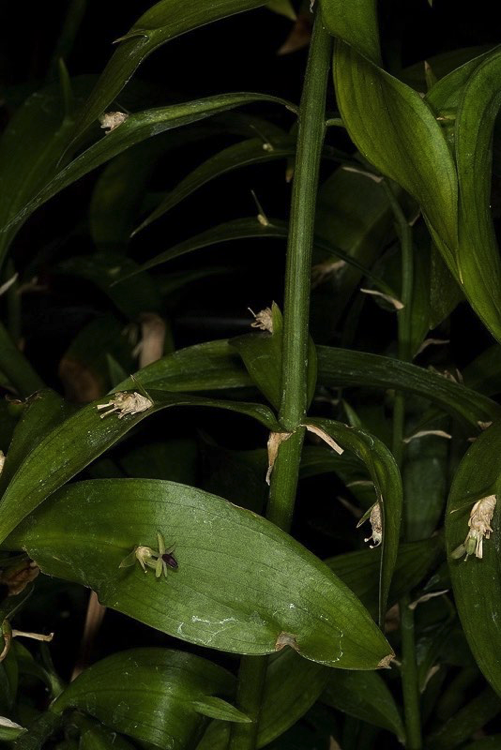
Cladophyll: a stem modified to be leaf like; here the cladophyll is bearing an inflorescence in the axil of bract, and each claophyll grows from the axil of a bract.
Compound Leaf, Palmate. What would you look for to tell this is one leaf with five leaflets and not a stem with 5 leaves?
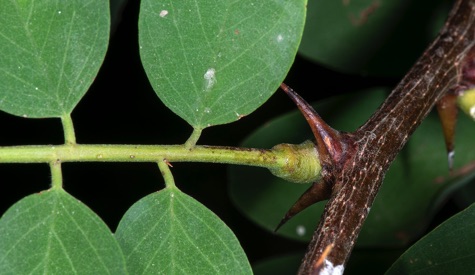
Compound Leaf, Pinnate. Two leaves are shown that terminate in two leaflets (= even pinnate) - [Fabaceae]
Corm - short, thick stem, typical of some monocots [Crocus sp.; Iridaceae]
Compound Leaf, Trifoliate: an alternative to the term “ternate”. [Acer griseum; Aceraceae]
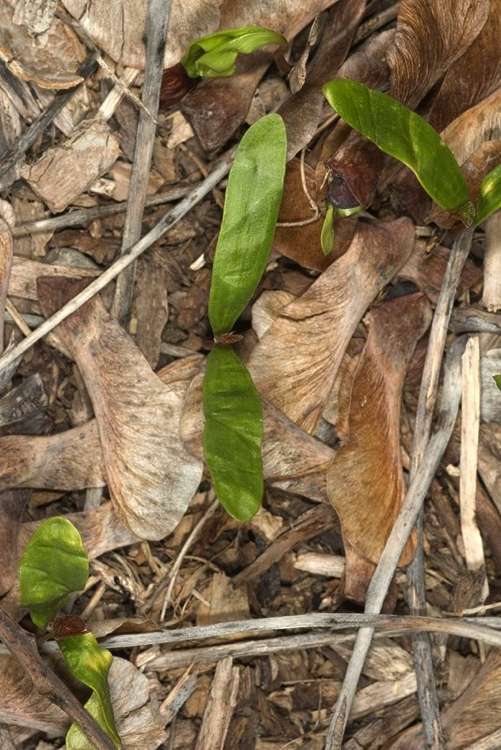
Dicotyledon - Acer pseudoplantanoides
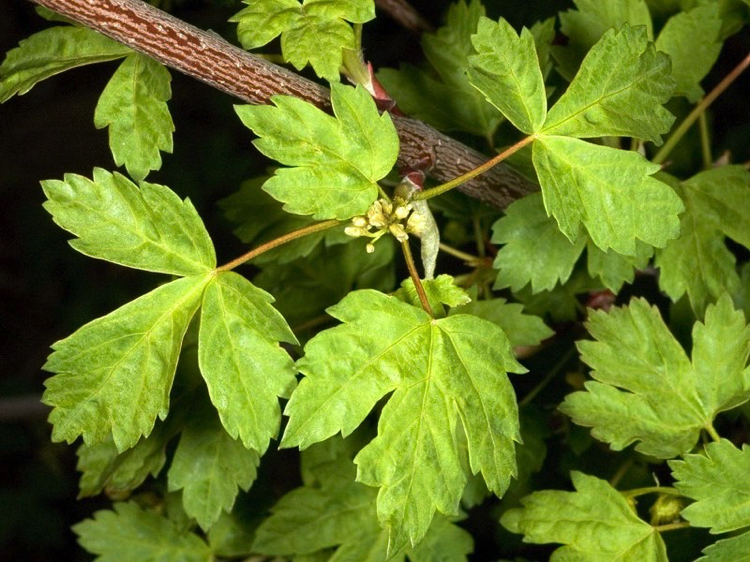
Dimorphic: having two versions of the same structure; in this case, the leaves are dimorphic (ternate and simple palmate compound) - Acer glabrum
Dissected: when the lobes on a leaf are deeply cut, but not to the mid vein. Each lobes on this palmate compound leaf is dissected - Acer palmatum [Aceraceae]
Equitant leaves - the leaf is folded along its mid vein and fused together along most of its length (so the outer surface is all abaxial) - [Iris sp.; Iridaceae]
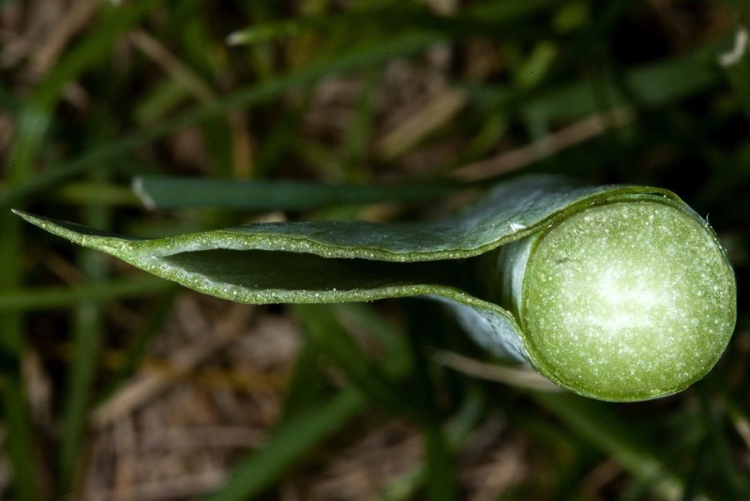
Equitant leaf - the leaf is folded along its mid vein and will be fused together along most of its length (above the point of this section) - [Iris sp.;
Node: The point where a leaf attaches to the stem; the stem between nodes is the “internode” - Pelargonium sp. [Geraniaceae]
![Prickle - an outgrowth of the epidermis; superficial, not vascularized (contrast with Spine and Thorn) [Rosaceae]](images/vegetativefeatures/22182AD81F9C4F218AB257BB3B4A7793/Prickle - an outgrowth of the epidermis superficial not vascularized contrast with Spine and Thorn Rosaceae.png "Prickle - an outgrowth of the epidermis; superficial, not vascularized (contrast with Spine and Thorn) [Rosaceae]")
Prickle - an outgrowth of the epidermis; superficial, not vascularized (contrast with Spine and Thorn) [Rosaceae]
Rhizome - a horizontal stem (has nodes and internodes) at or below ground level [09A_0194; Trifolium sp.; Fabaceae]
Sheathing - in this case, the leaf base is wrapped around and “sheathing” the stem - [Iris sp.; Iridaceae]
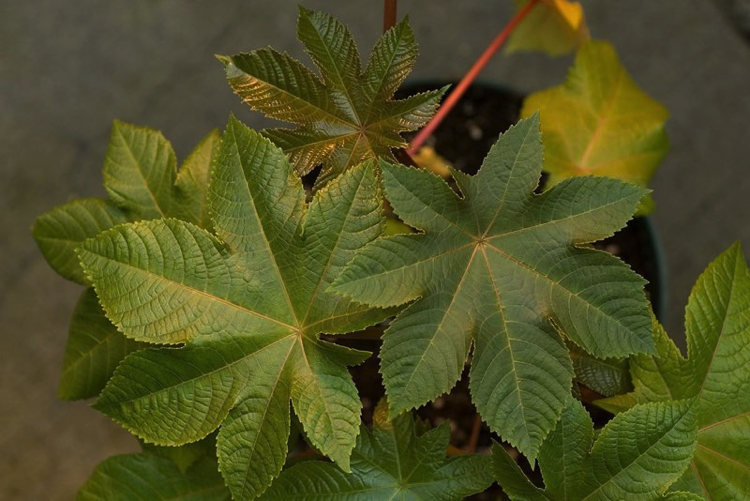
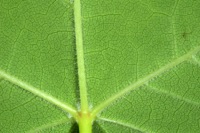
Simple leaf, palmate venation; these leaves are also “peltate” -
![Simple leaf, palmate venation - Malva neglecta [Malvaceae]](images/vegetativefeatures/22182AD81F9C4F218AB257BB3B4A7793/Simple leaf palmate venation - Malva neglecta Malvaceae.png "Simple leaf, palmate venation - Malva neglecta [Malvaceae]")
Simple leaf, palmate venation - Malva neglecta [Malvaceae]
![Simple leaf, palmate venation - Acer grandidentatum [Aceraceae]](images/vegetativefeatures/22182AD81F9C4F218AB257BB3B4A7793/Simple leaf palmate venation - Acer grandidentatum Aceraceae.png "Simple leaf, palmate venation - Acer grandidentatum [Aceraceae]")
Simple leaf, palmate venation - Acer grandidentatum [Aceraceae]
![Spine: a modified leaf; here the petiole is spinose and the blade falls off - Fouquieria splendens [Fouquieriaceae]](images/vegetativefeatures/22182AD81F9C4F218AB257BB3B4A7793/Spine a modified leaf here the petiole is spinose and the blade falls off - Fouquieria splendens Fouquieriaceae.png "Spine: a modified leaf; here the petiole is spinose and the blade falls off - Fouquieria splendens [Fouquieriaceae]")
Spine: a modified leaf; here the petiole is spinose and the blade falls off - Fouquieria splendens [Fouquieriaceae]
![Spine: a modified leaf; determining if a structure is modified leaf or stem may require anatomical and developmental study - [Cactaceae]](images/vegetativefeatures/22182AD81F9C4F218AB257BB3B4A7793/Spine a modified leaf determining if a structure is modified leaf or stem may require anatomical and developmental study - Cactaceae.png "Spine: a modified leaf; determining if a structure is modified leaf or stem may require anatomical and developmental study - [Cactaceae]")
Spine: a modified leaf; determining if a structure is modified leaf or stem may require anatomical and developmental study - [Cactaceae]
Stipule: outgrowths paired at the base of a leaf (one on each side of the petiole); here, the stipules are foliar - Pelargonium sp. [Geraniaceae]
![Stipule: these often grow along the petiole base in this family - Rosa [Rosaceae]](images/vegetativefeatures/22182AD81F9C4F218AB257BB3B4A7793/Stipule these often grow along the petiole base in this family - Rosa Rosaceae.png "Stipule: these often grow along the petiole base in this family - Rosa [Rosaceae]")
Stipule: these often grow along the petiole base in this family - Rosa [Rosaceae]
![Stolon: asexual vegetative reproduction by above grown arching stems that root where new plantlets are formed - [Rosaceae]](images/vegetativefeatures/22182AD81F9C4F218AB257BB3B4A7793/Stolon asexual vegetative reproduction by above grown arching stems that root where new plantlets are formed - Rosaceae.png "Stolon: asexual vegetative reproduction by above grown arching stems that root where new plantlets are formed - [Rosaceae]")
Stolon: asexual vegetative reproduction by above grown arching stems that root where new plantlets are formed - [Rosaceae]
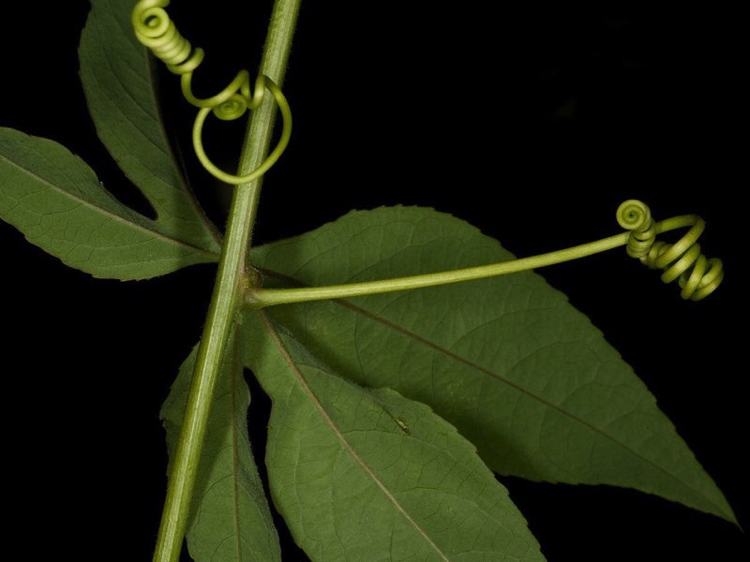
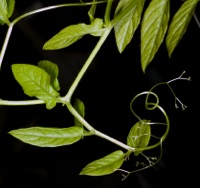
Tendril: tendrils are structures modified for grasping and holding by vining plants; in this case, the tendril is a modified stem - Passiflora
![Tendril: here the terminal leaflets of a compound leaf are tendrillate - Cobaea scandens [Polemoniaceae]](images/vegetativefeatures/22182AD81F9C4F218AB257BB3B4A7793/Tendril here the terminal leaflets of a compound leaf are tendrillate - Cobaea scandens Polemoniaceae.png "Tendril: here the terminal leaflets of a compound leaf are tendrillate - Cobaea scandens [Polemoniaceae]")
Tendril: here the terminal leaflets of a compound leaf are tendrillate - Cobaea scandens [Polemoniaceae]
Tendrils: here the stipules from the leaf are tendrillate - Smilax sp. [Smilacaceae]
Ternate: a compound leaf with three leaflets (= trifoliate) - Fragaria sp. [Rosaceae]
![Thorn: thorns are modified stems (contrast with spines and prickles) - Euphorbia splendens [Euphorbiaceae]](images/vegetativefeatures/22182AD81F9C4F218AB257BB3B4A7793/Thorn thorns are modified stems contrast with spines and prickles - Euphorbia splendens Euphorbiaceae.png "Thorn: thorns are modified stems (contrast with spines and prickles) - Euphorbia splendens [Euphorbiaceae]")
Thorn: thorns are modified stems (contrast with spines and prickles) - Euphorbia splendens [Euphorbiaceae]