Contemporary Circumscription Compared with A Utah Flora 4th ed.
Bio430
Polygonaceae
No differences.
Key Features
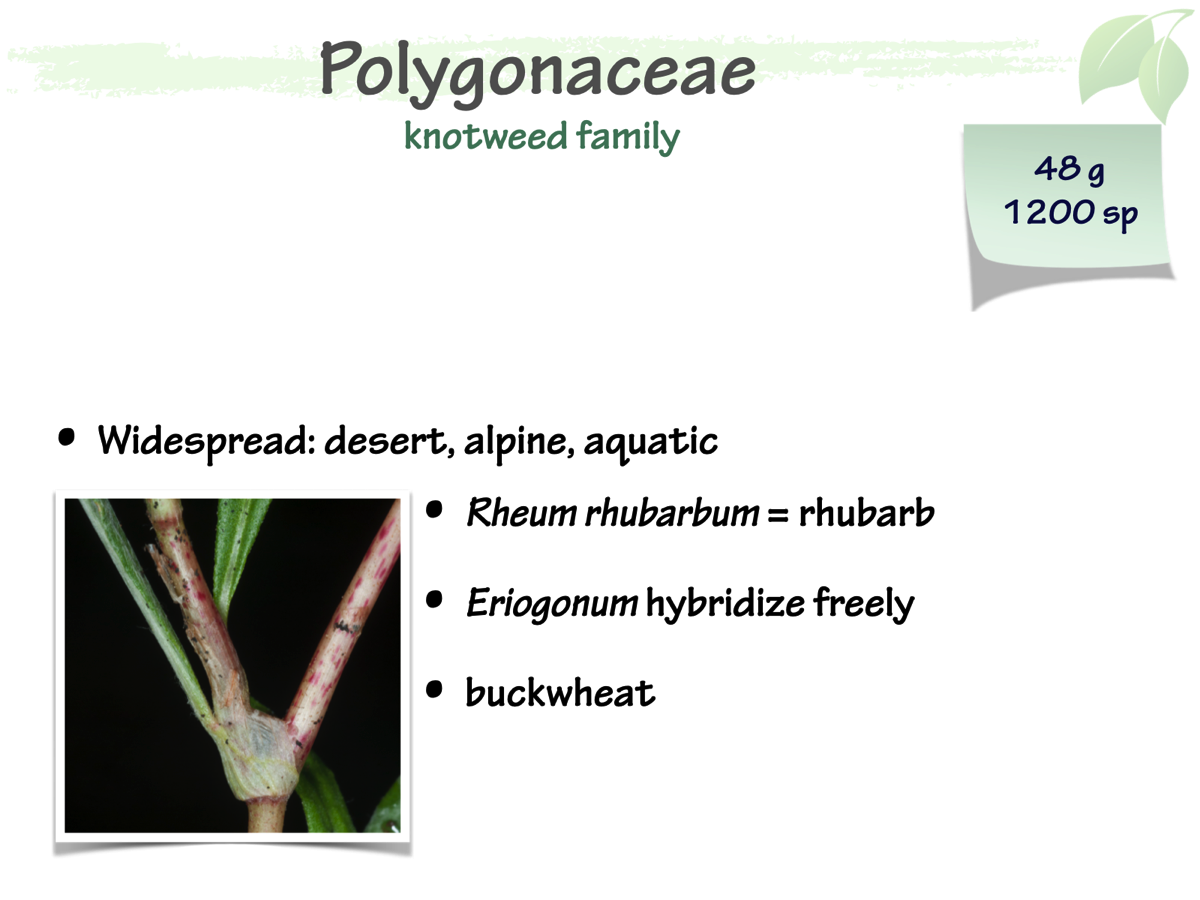
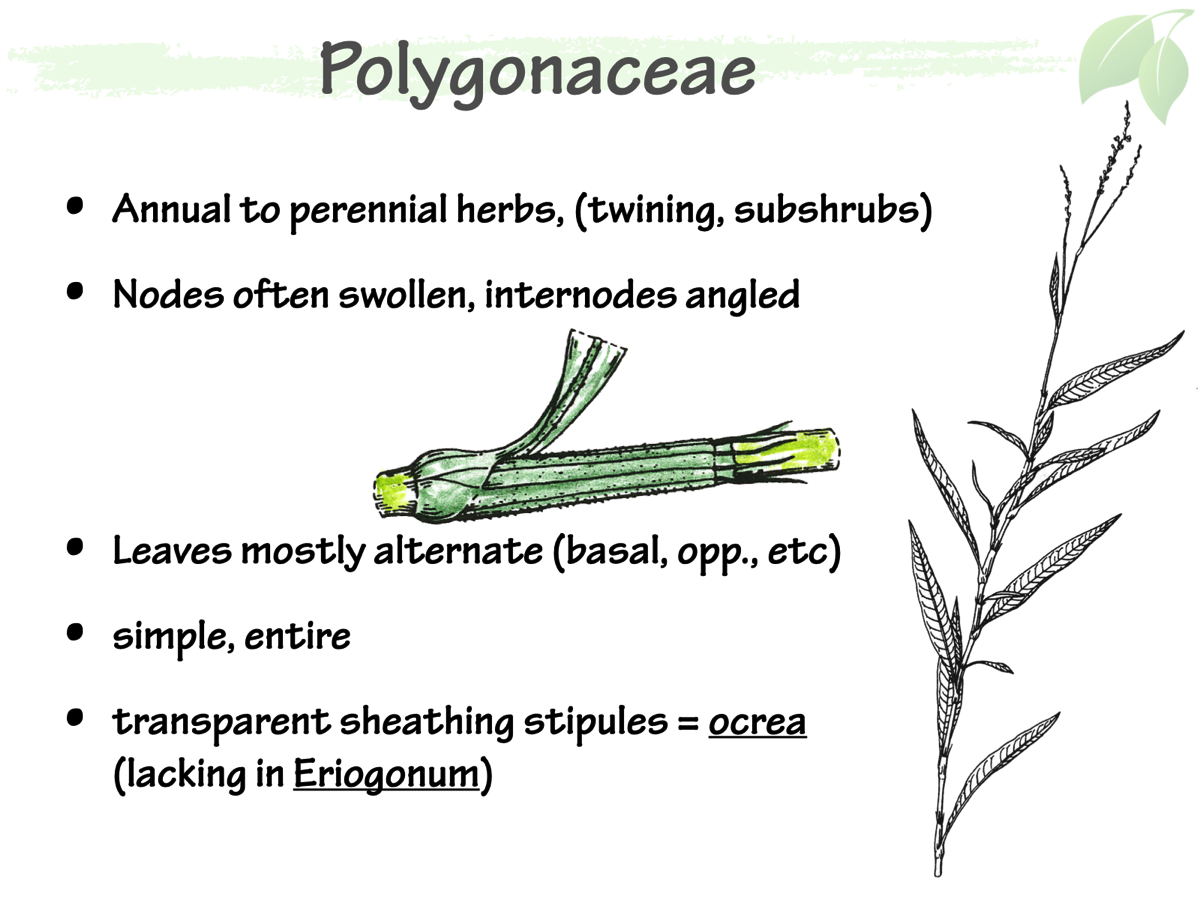
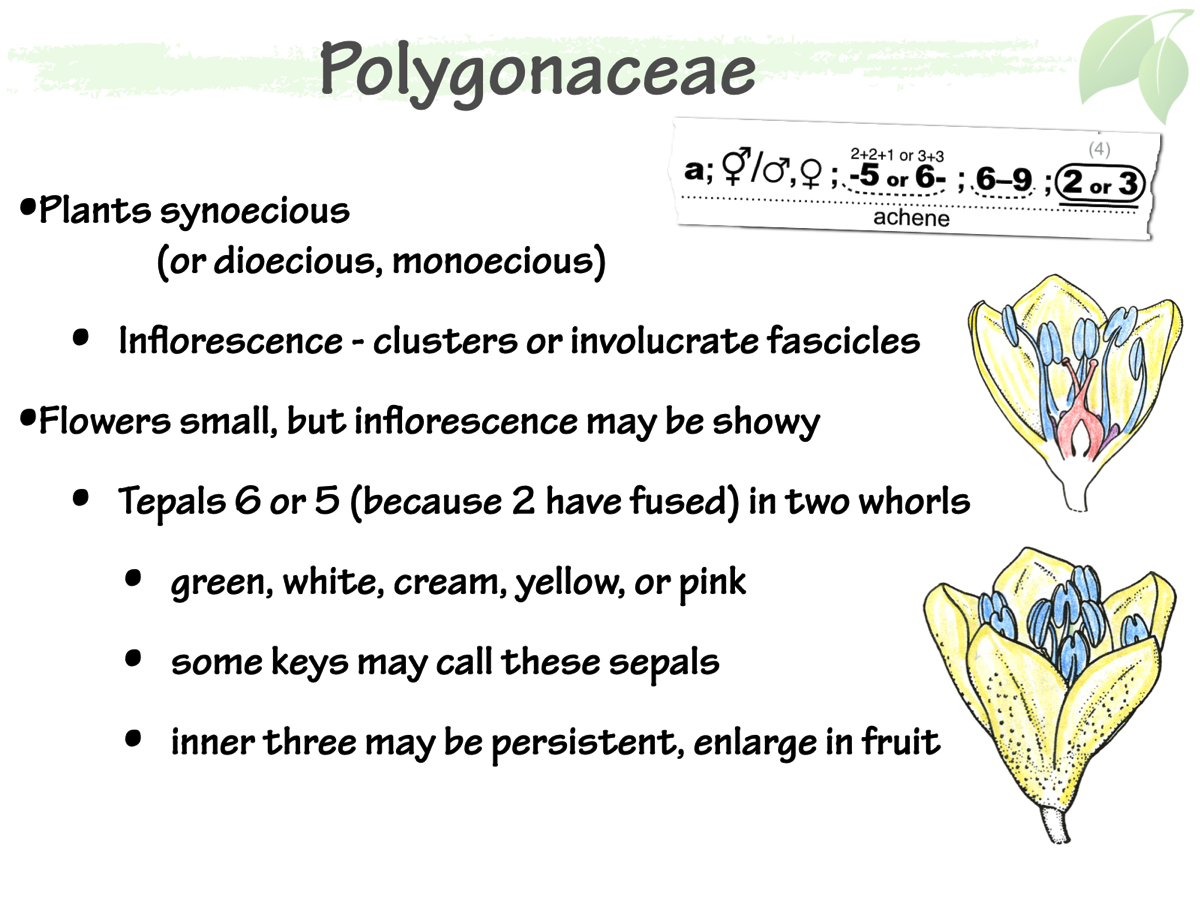
The most outstanding feature is the ocrea, a membranous, sheathing stipule that encircles the stem (but this feature is missing in Erigonum). Flowers are small, papery, and have either 5 or 6 tepals. They may be perfect or imperfect.
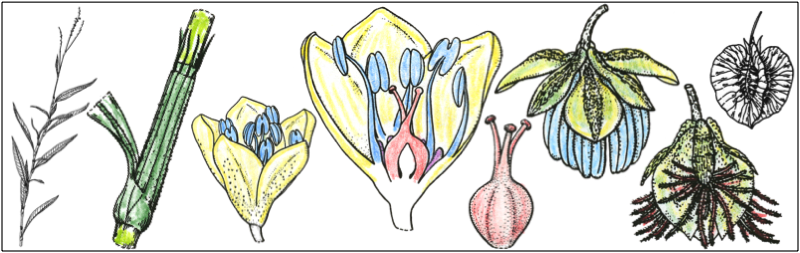
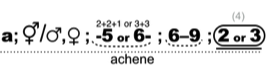
Rumex
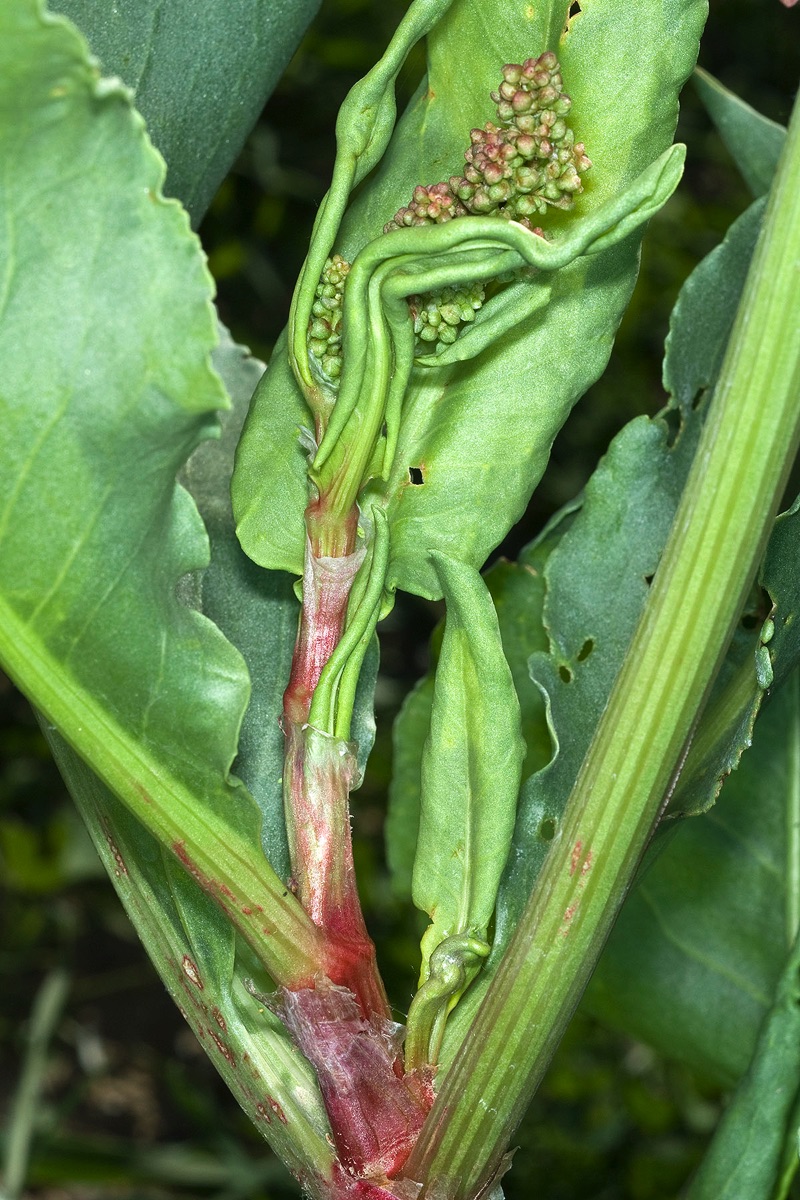
Rumex - young leaves with ocreas
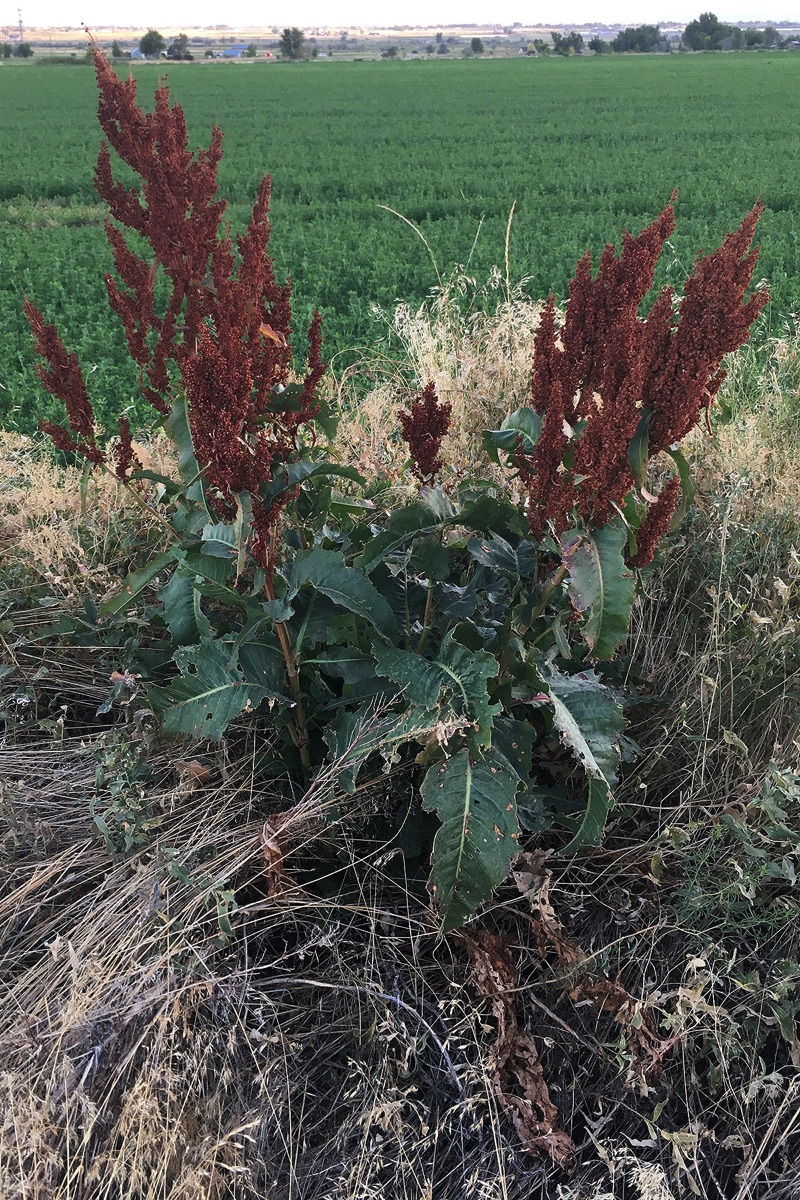
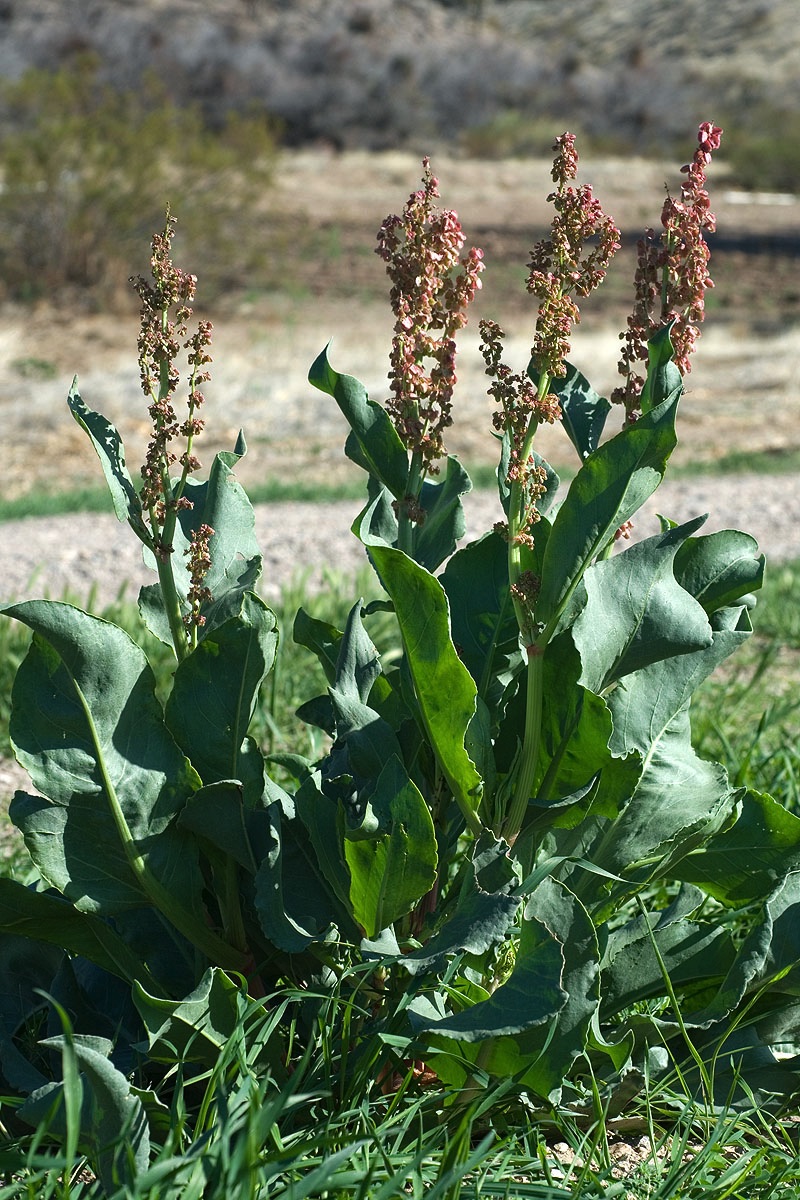
Rumex
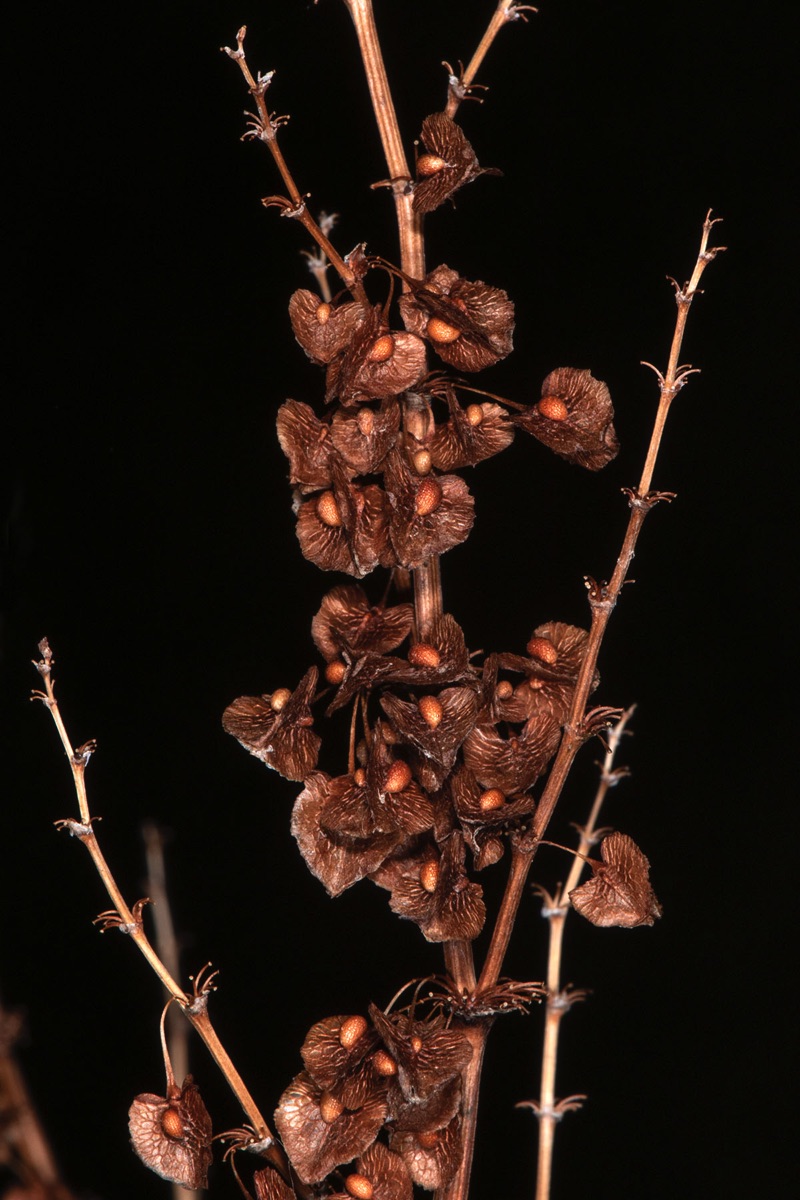
Rumex, mature, dry inflorescence
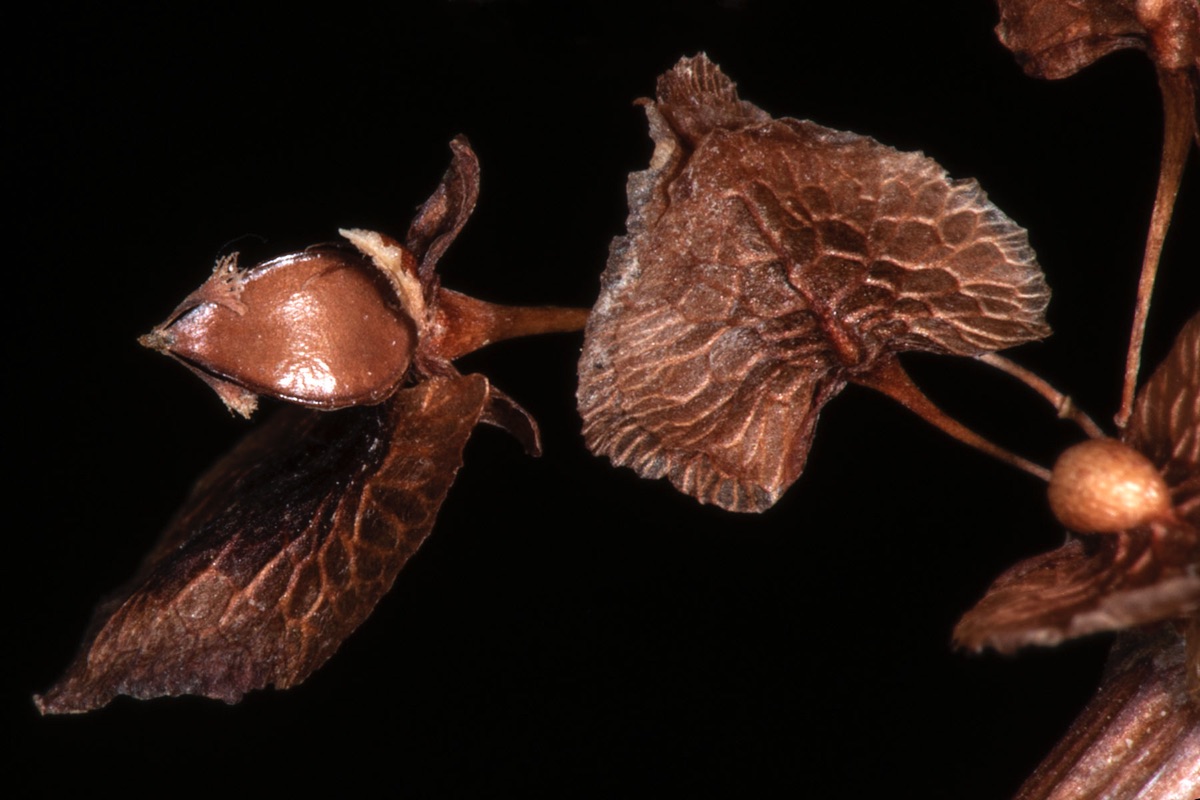
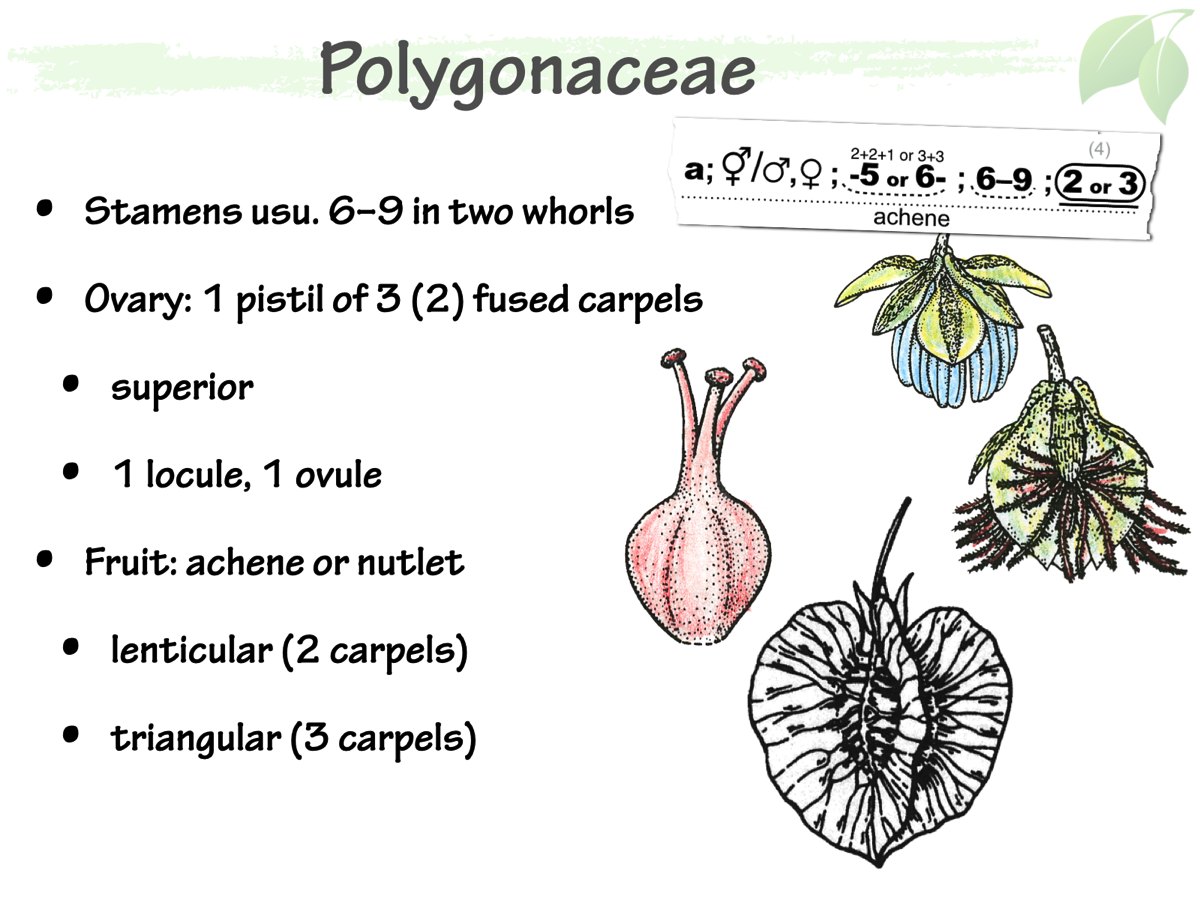
Rumex - removing 2 of 3 large tepals to reveal fruit, fruit showing deflexed styles/stigmas
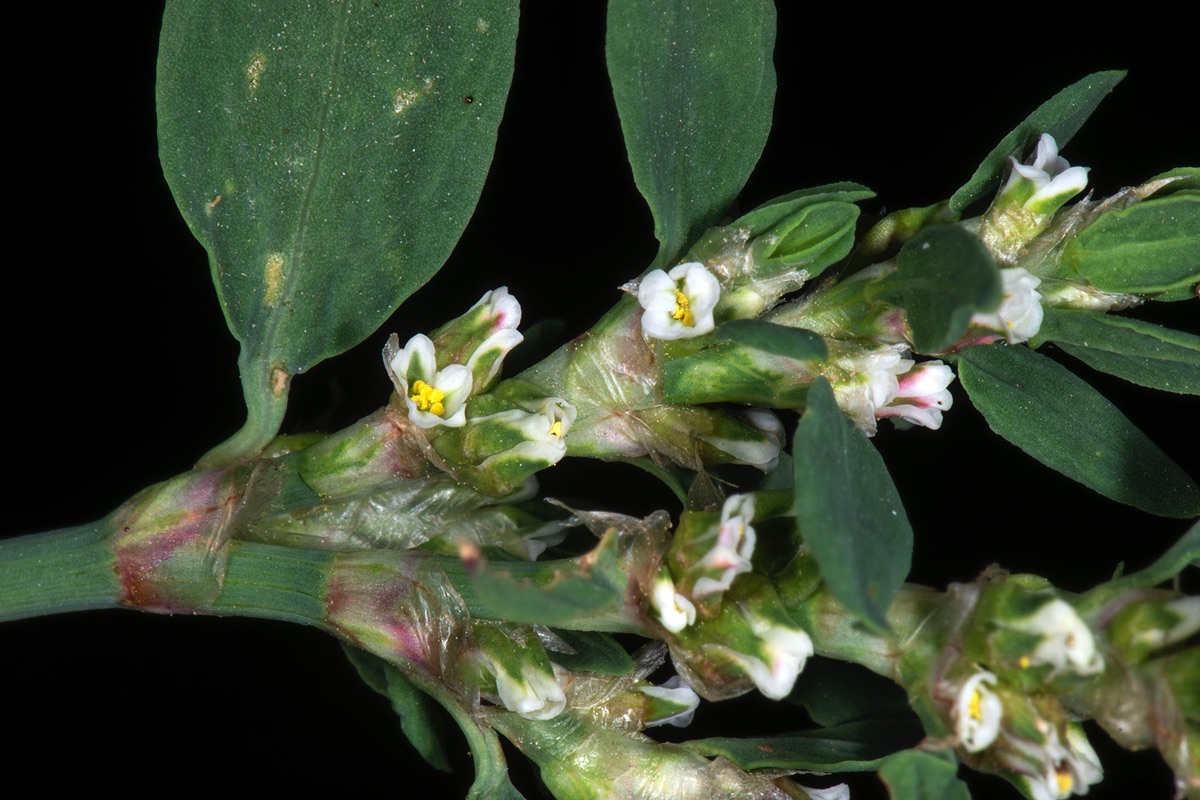
Polygonum aviculare - this plant grows prostrate against the ground
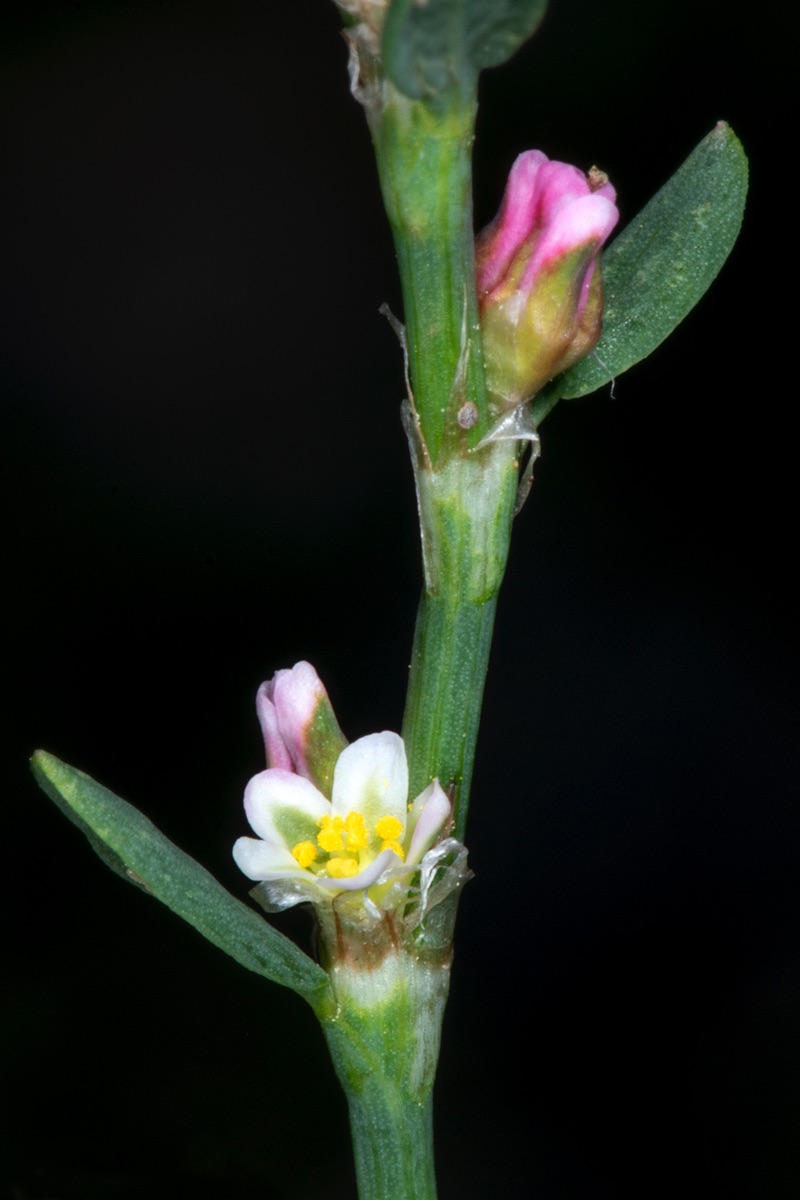
Polygonum aviculare - tiny flowers are typical for the family
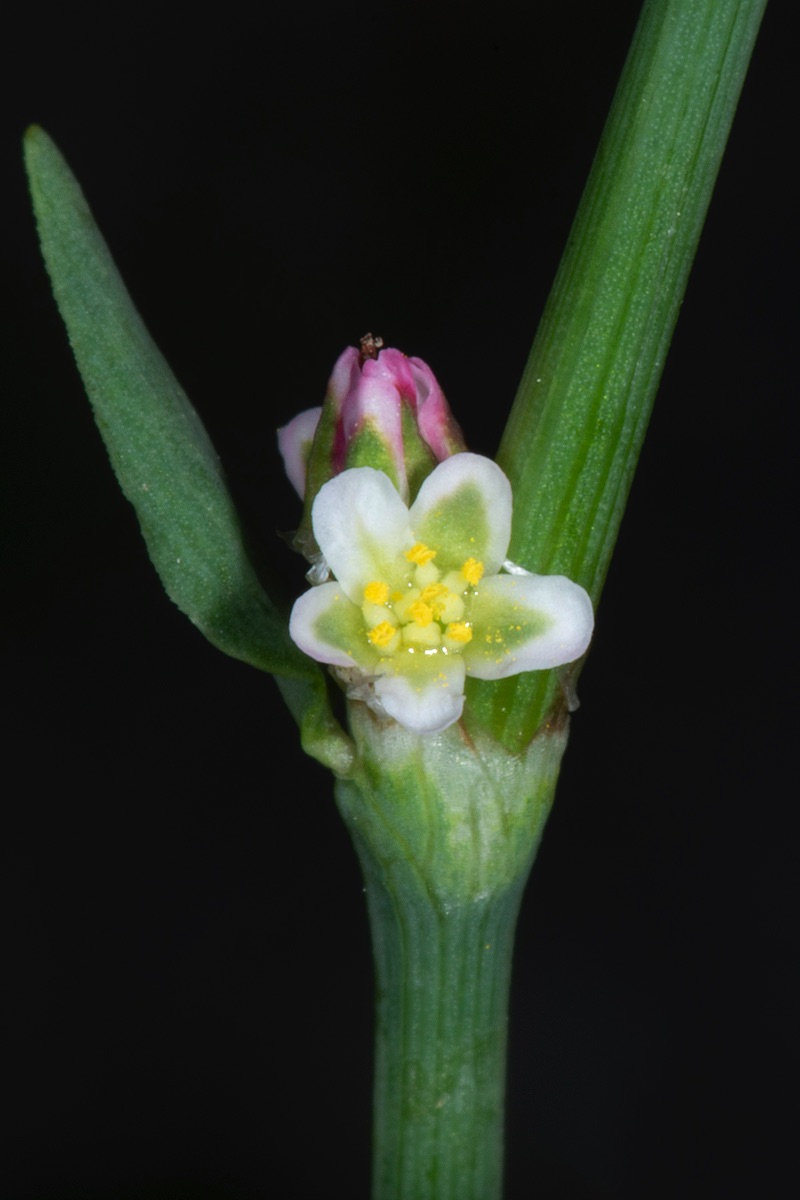
Polygonum aviculare
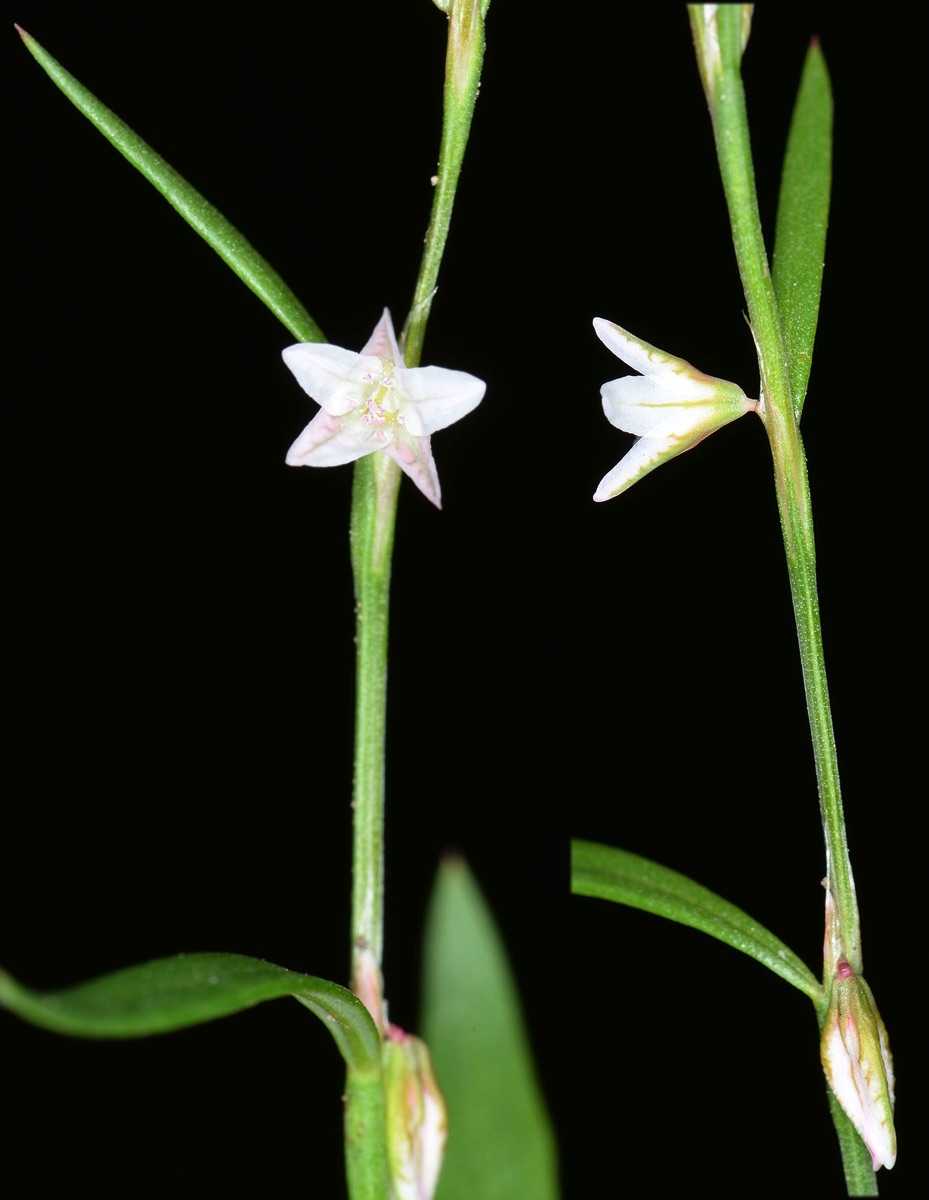
Polygonum douglasii
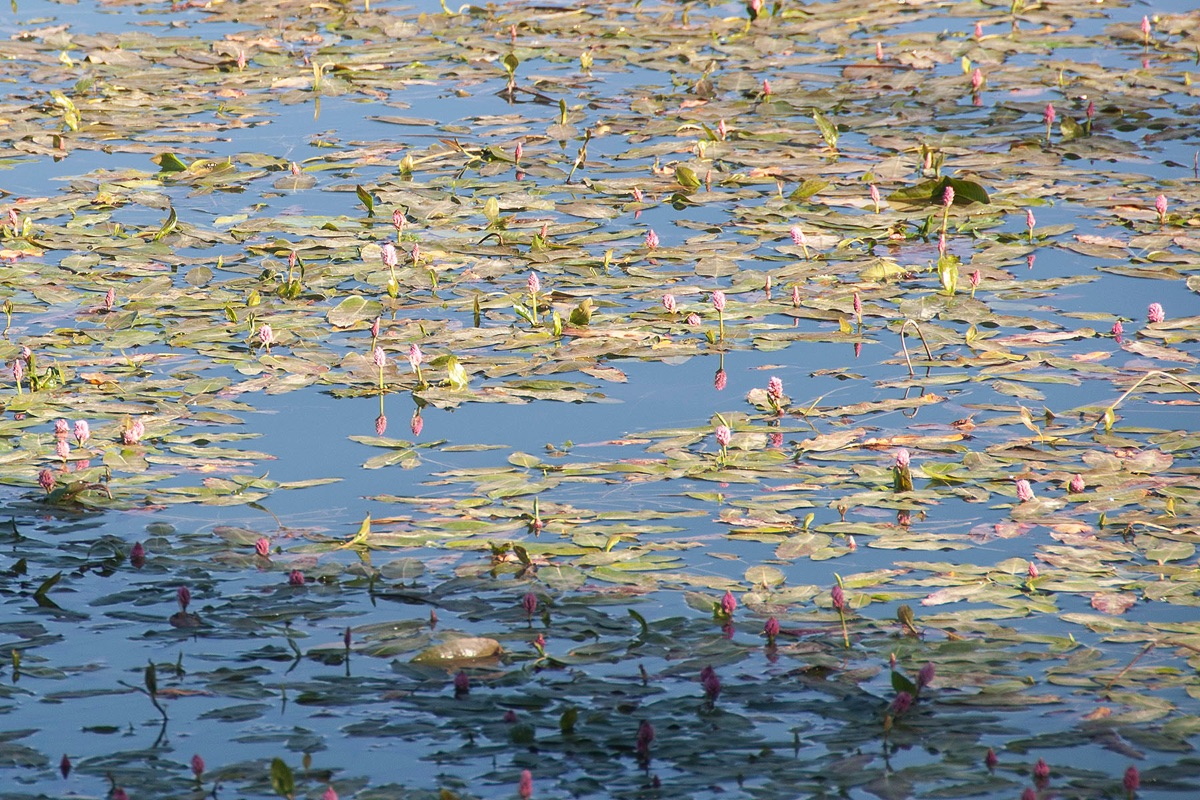
Polygonum amphibium
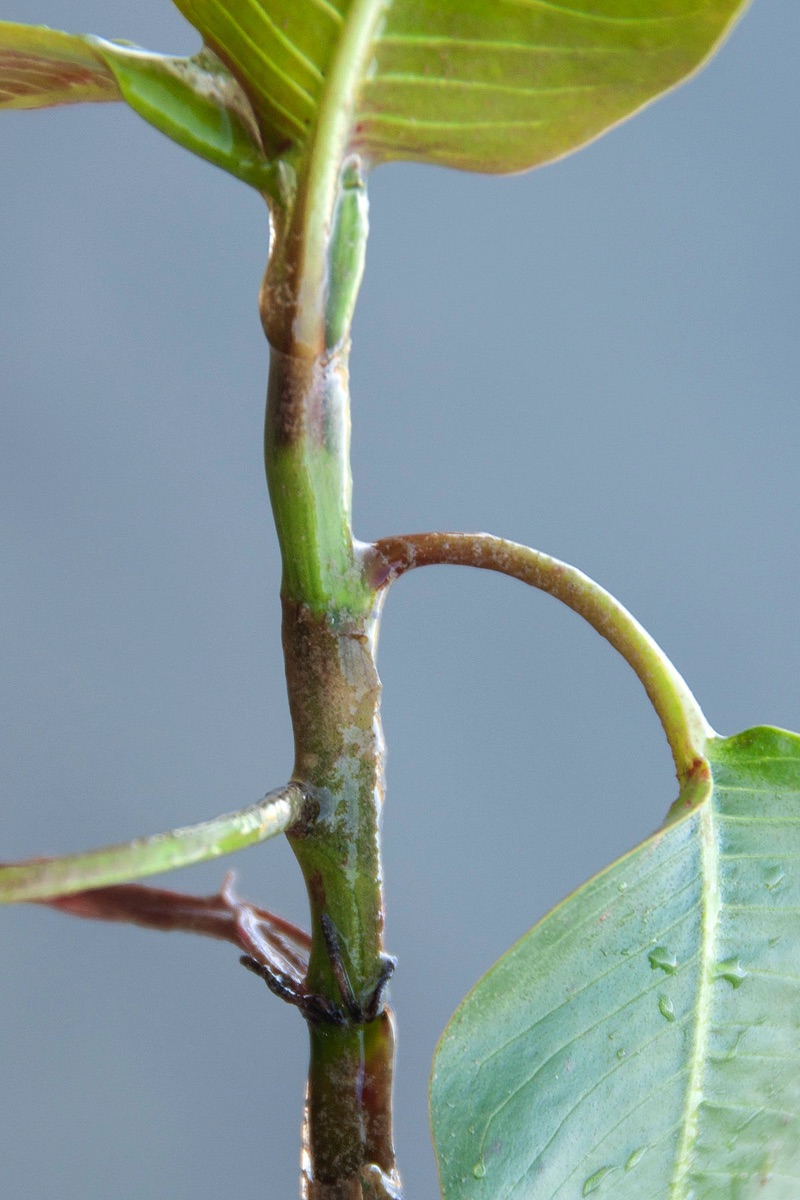
Polygonum amphibium - ocreas
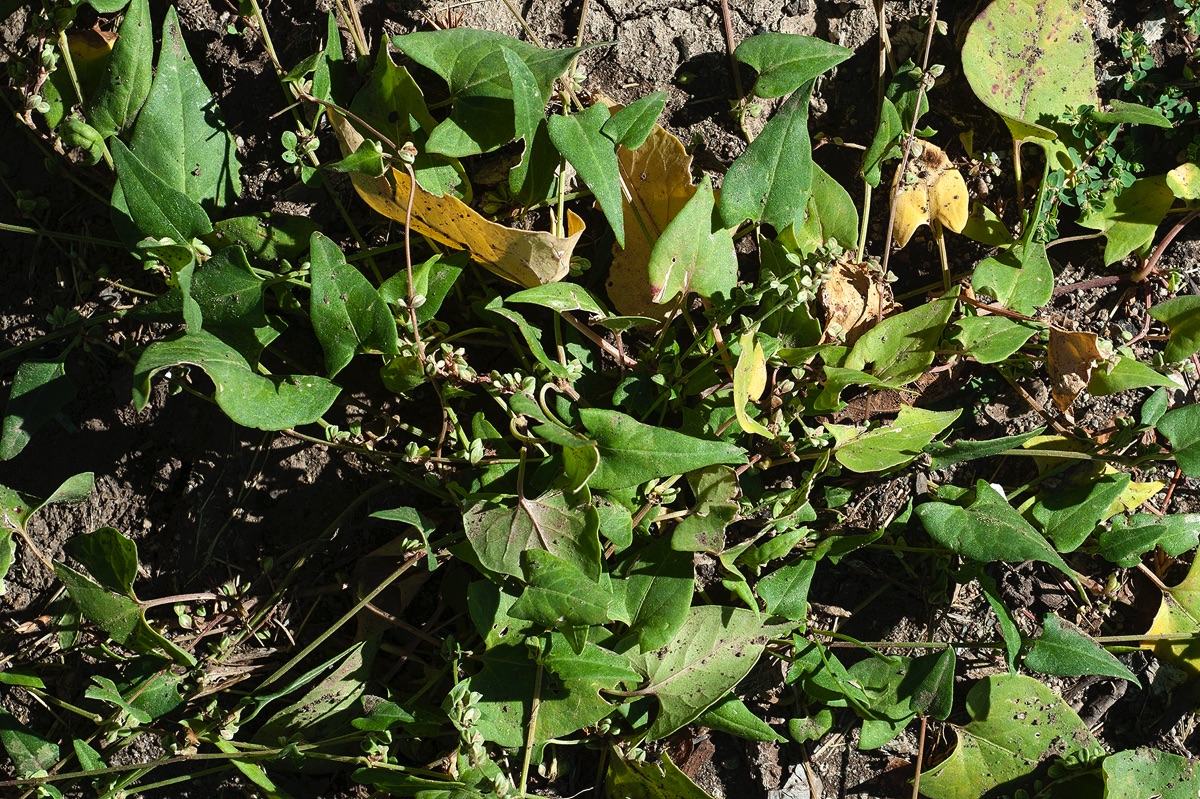
Buckwheat - a twining vine that looks a bit like morning glory, but can be easily distinguished by leaves and flowers
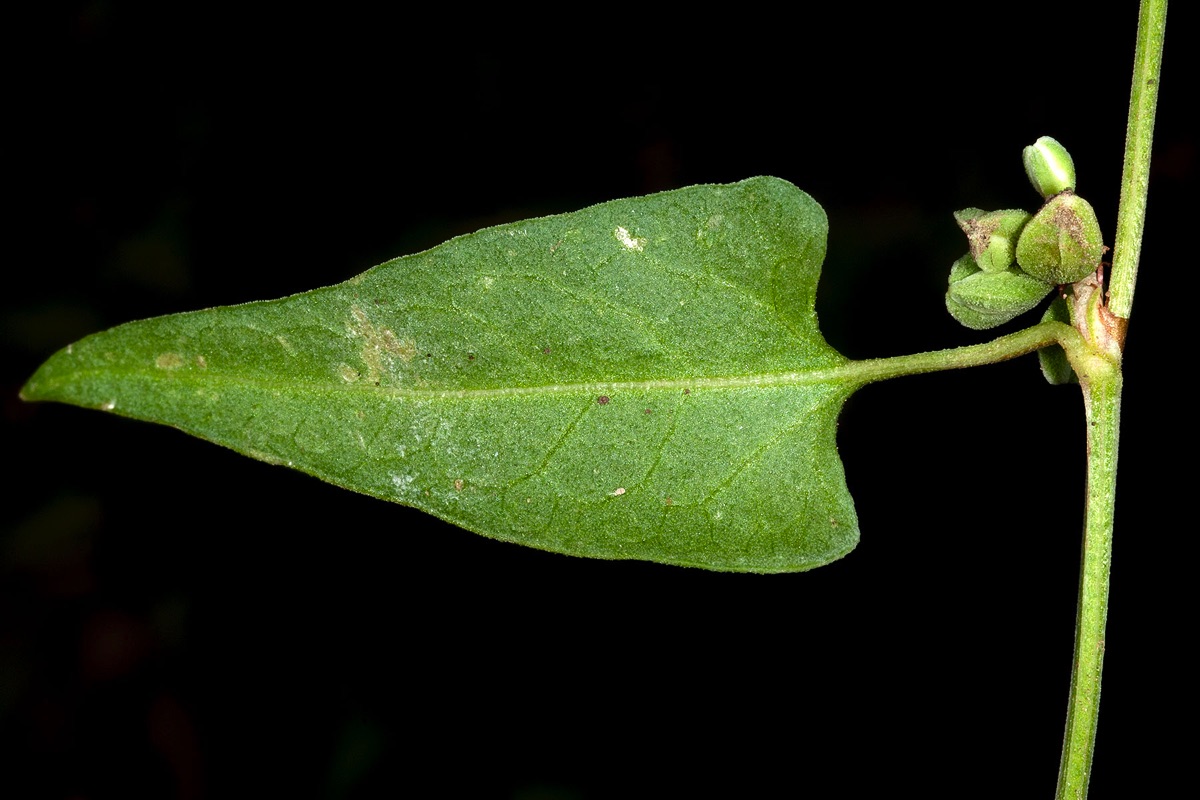
Buckwheat
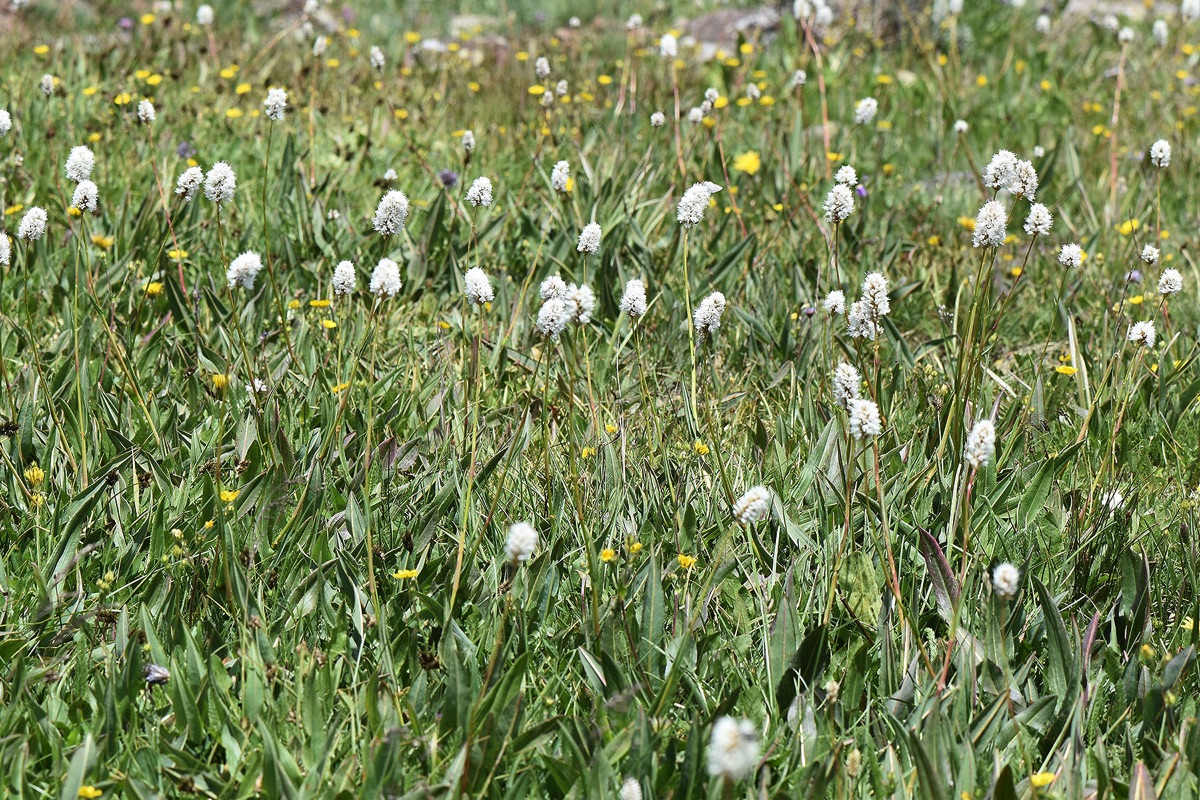
N17_4635_mod21.jpg
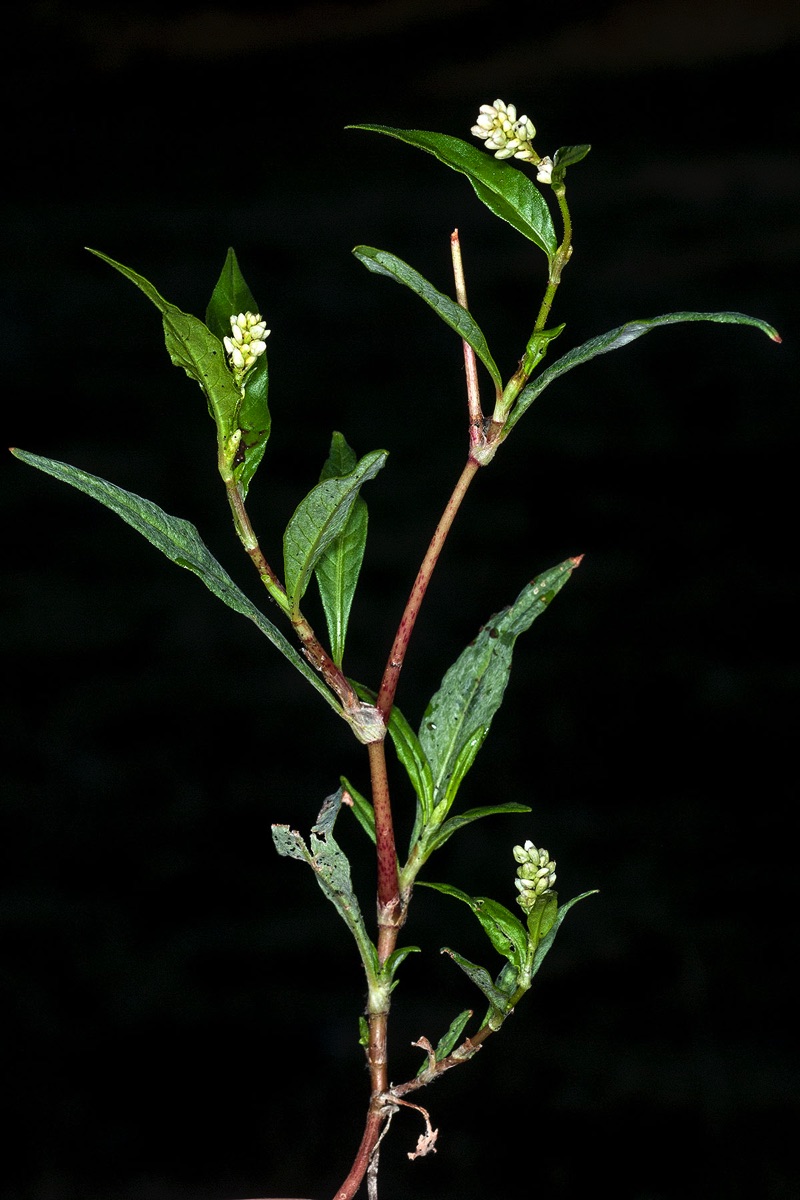
Persicaria
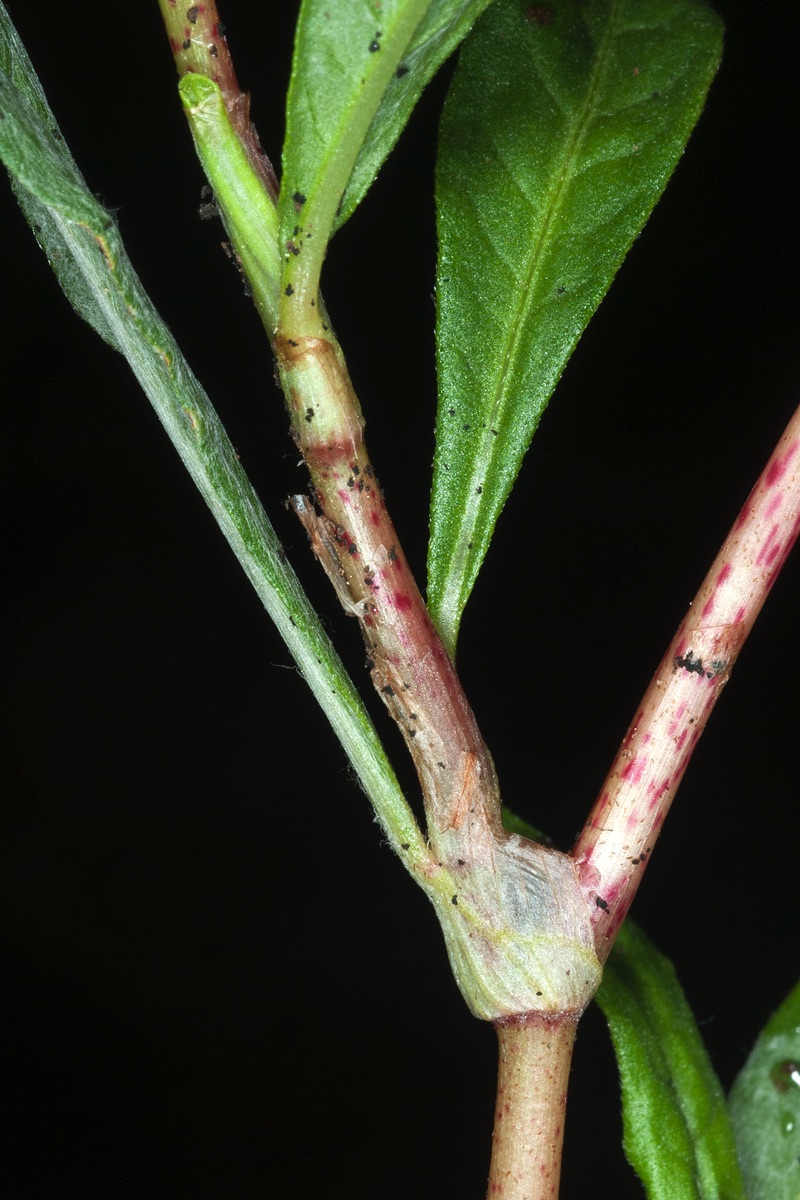
Persicaria
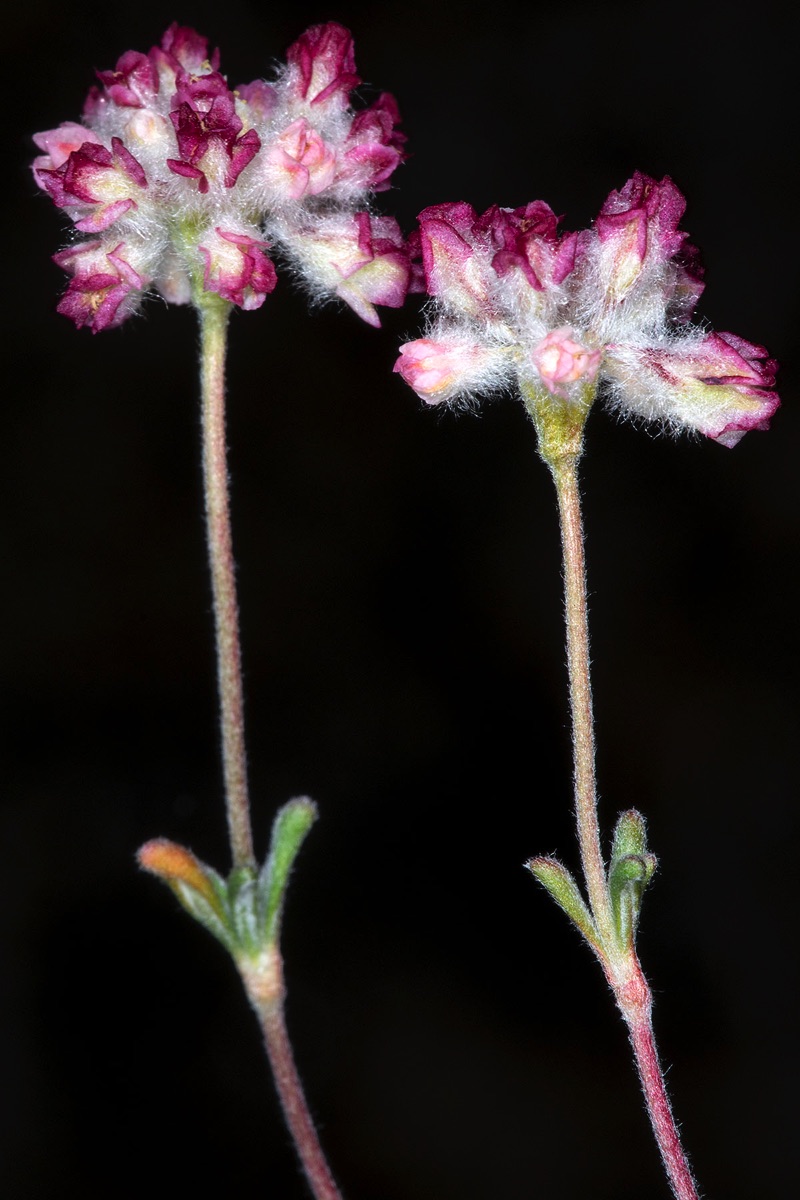
Eriogonum thymoides
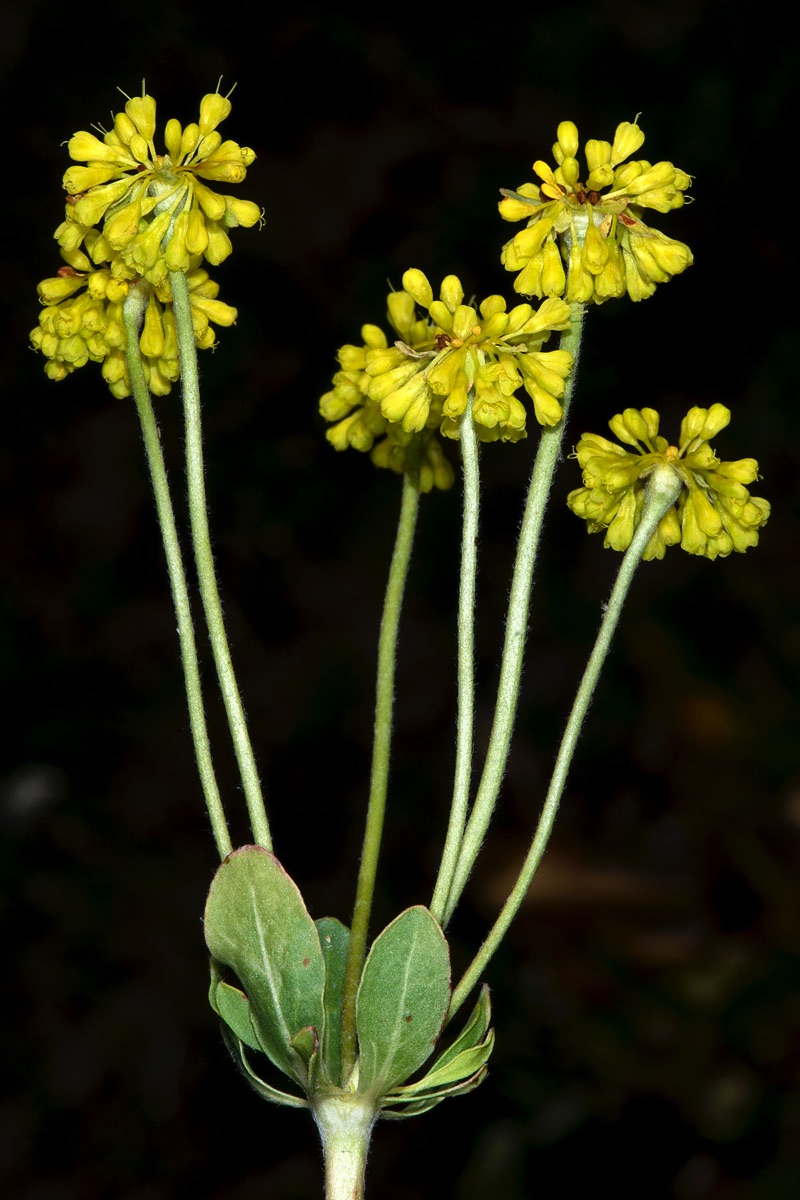
Eriogonum - This genus and its relatives lack an ocrea, but the flowers are similar to other polygonaceae
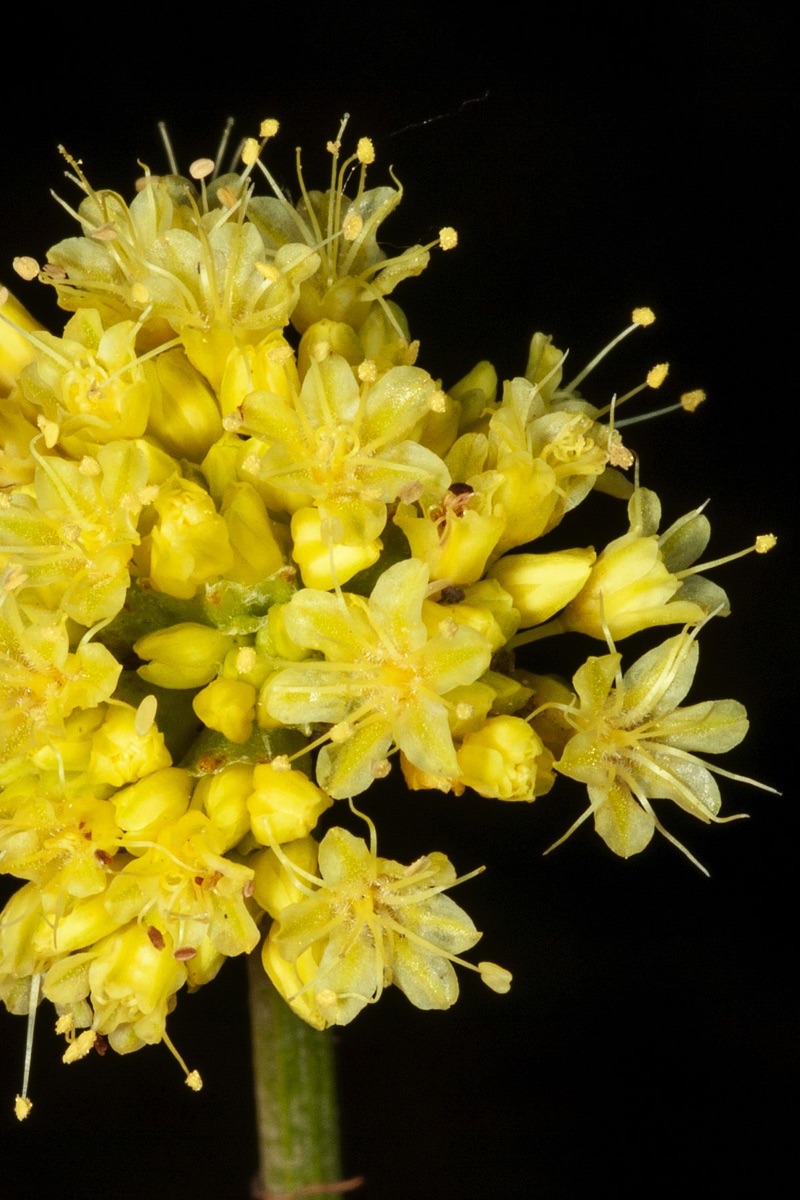
Eriogonum - This genus and its relatives lack an ocrea, but the flowers are similar to other polygonaceae
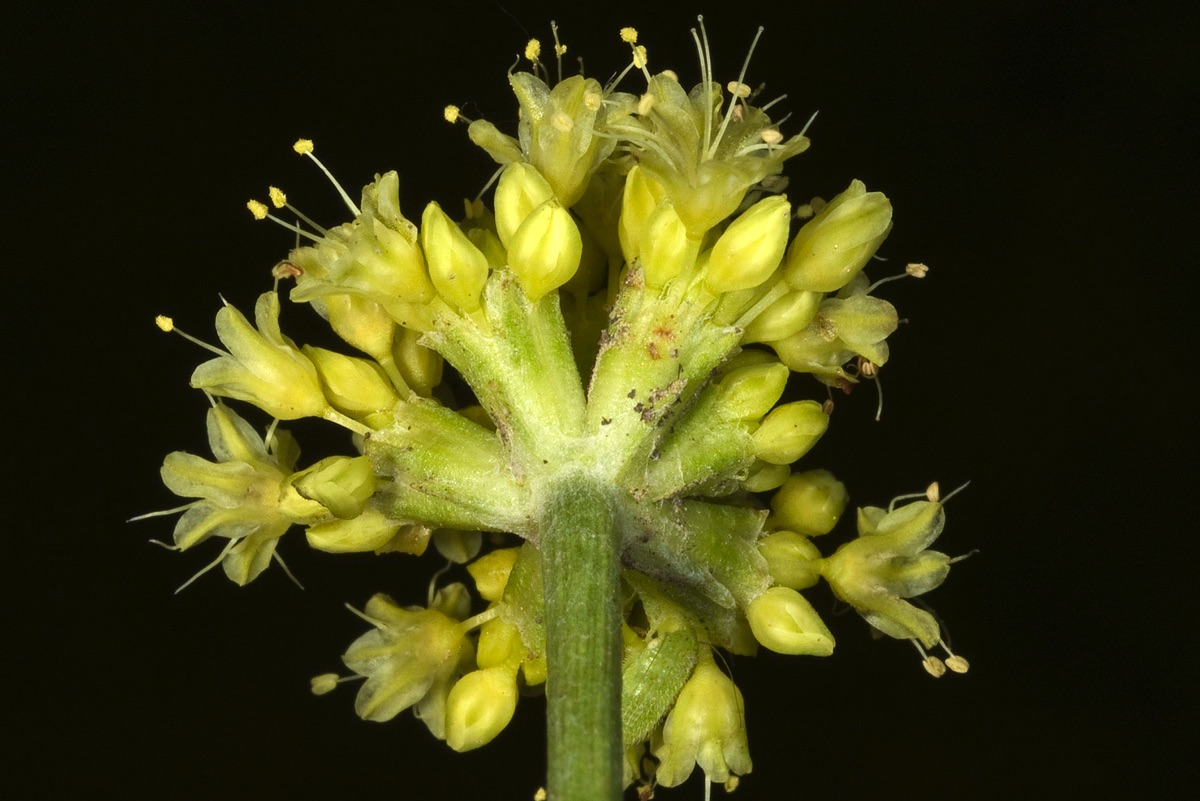
Eriogonum - if you look closely at open flowers, one whorl of 3 tepals is outside the second whorl...but this can be hard to tell so A Utah Flora describes perianth as a single whorl
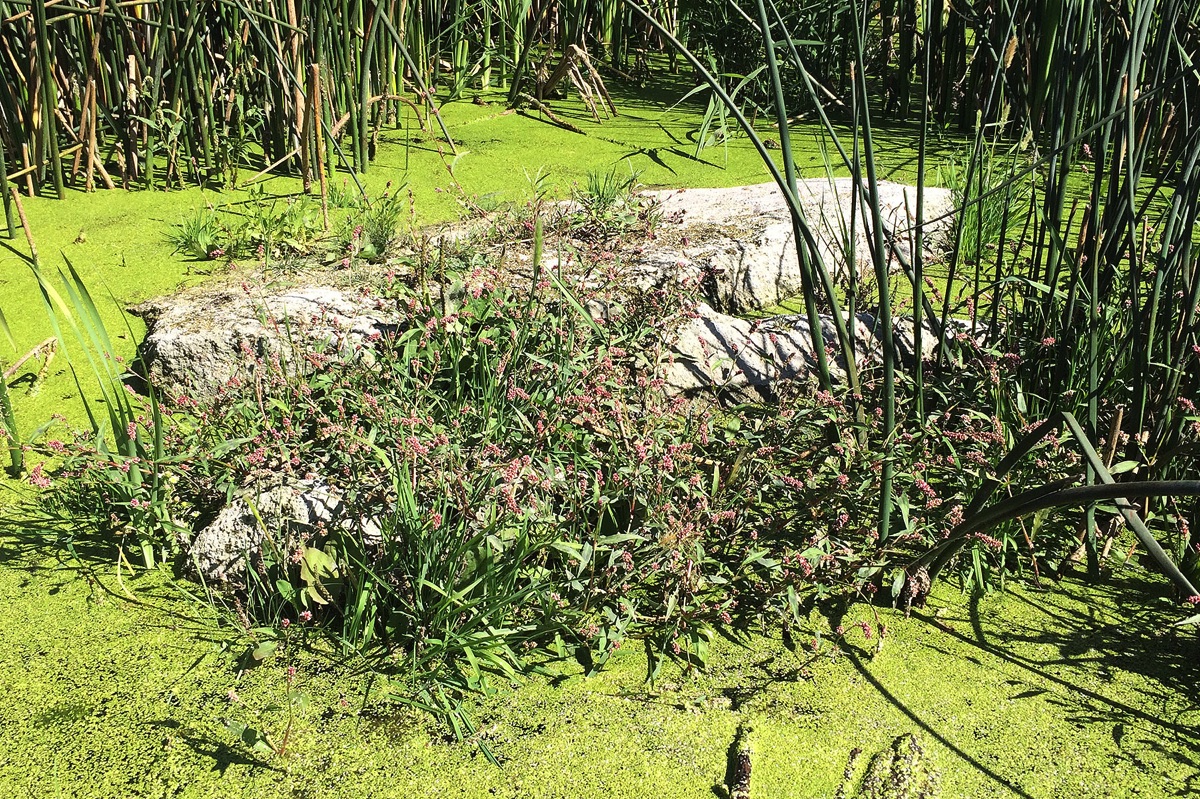
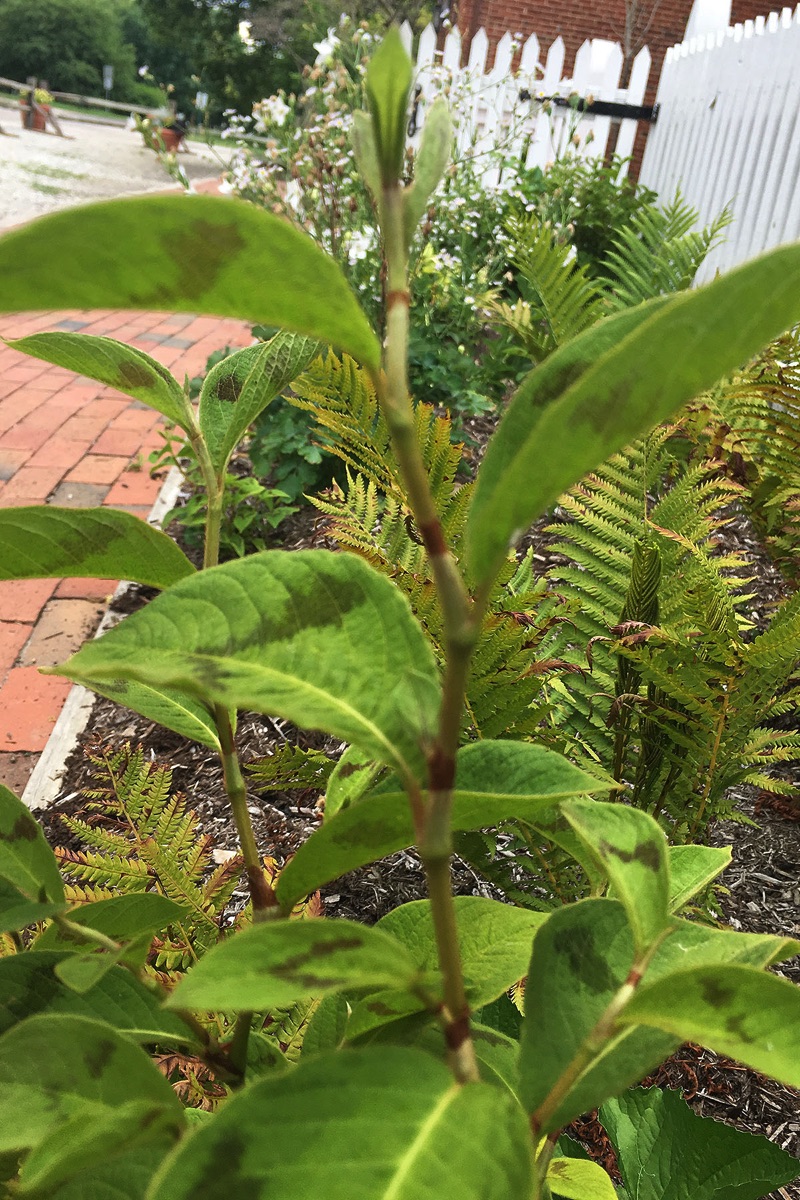
Typical vegetative habit with ochrea, swollen nodes, and zig-zag stems
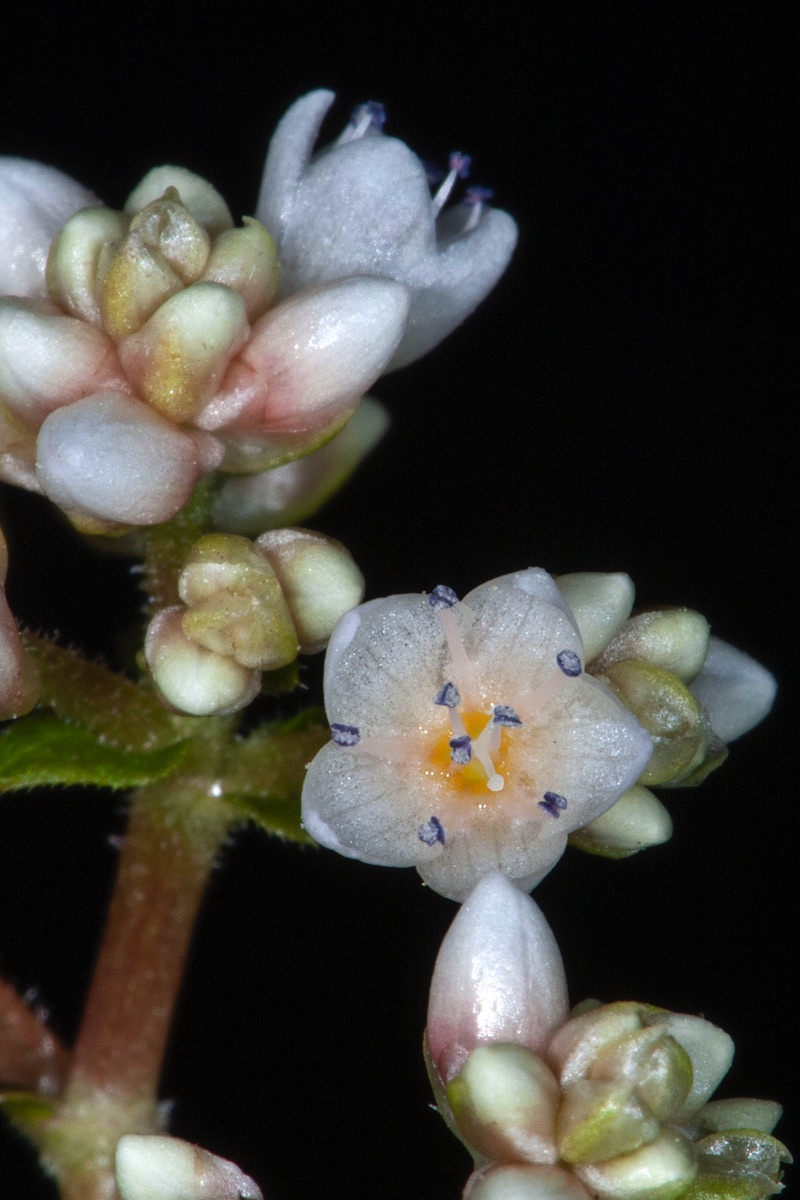
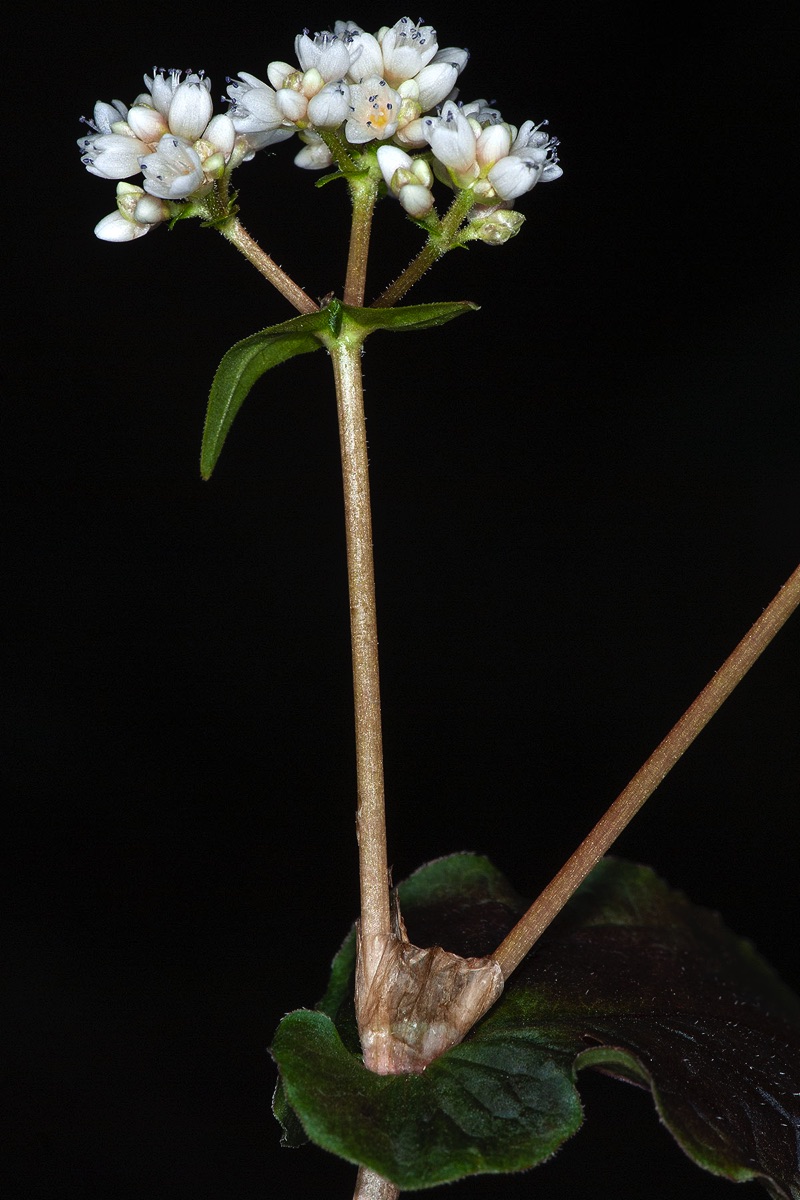
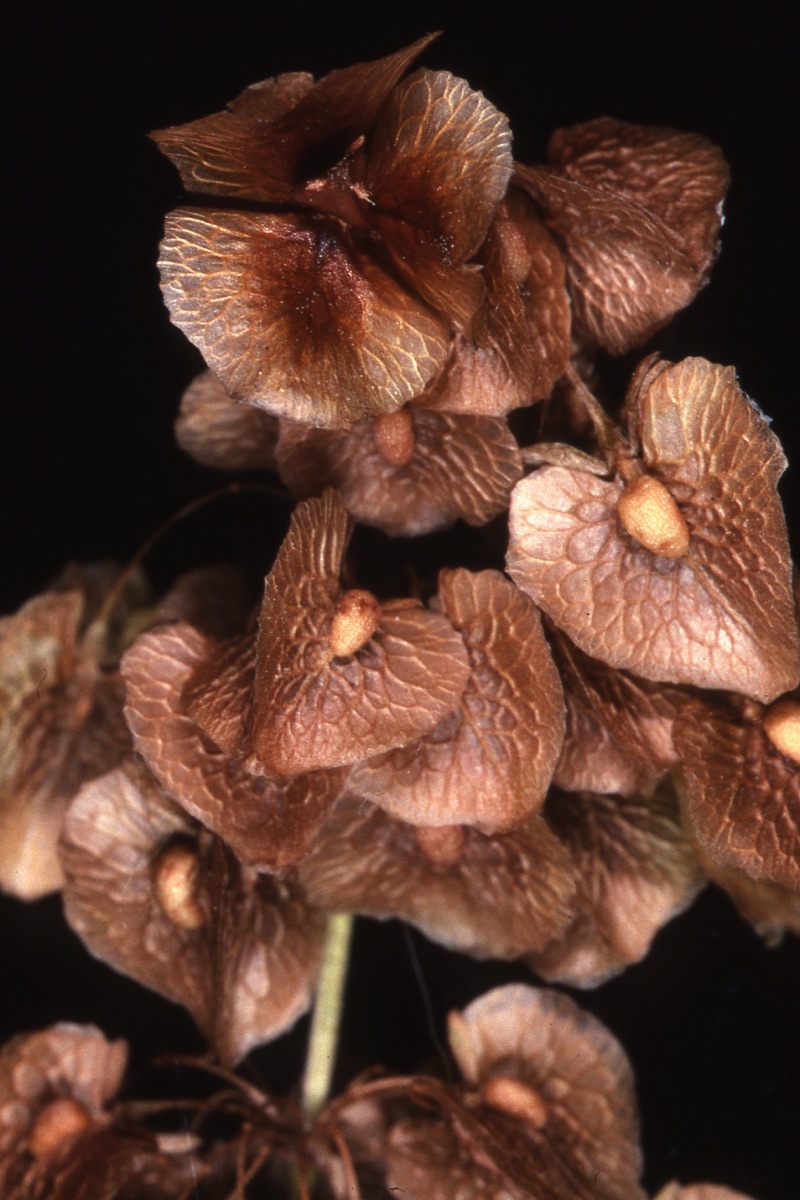
Rumex sp. with enlarged inner tepals; these pulled away from triangular achene at top
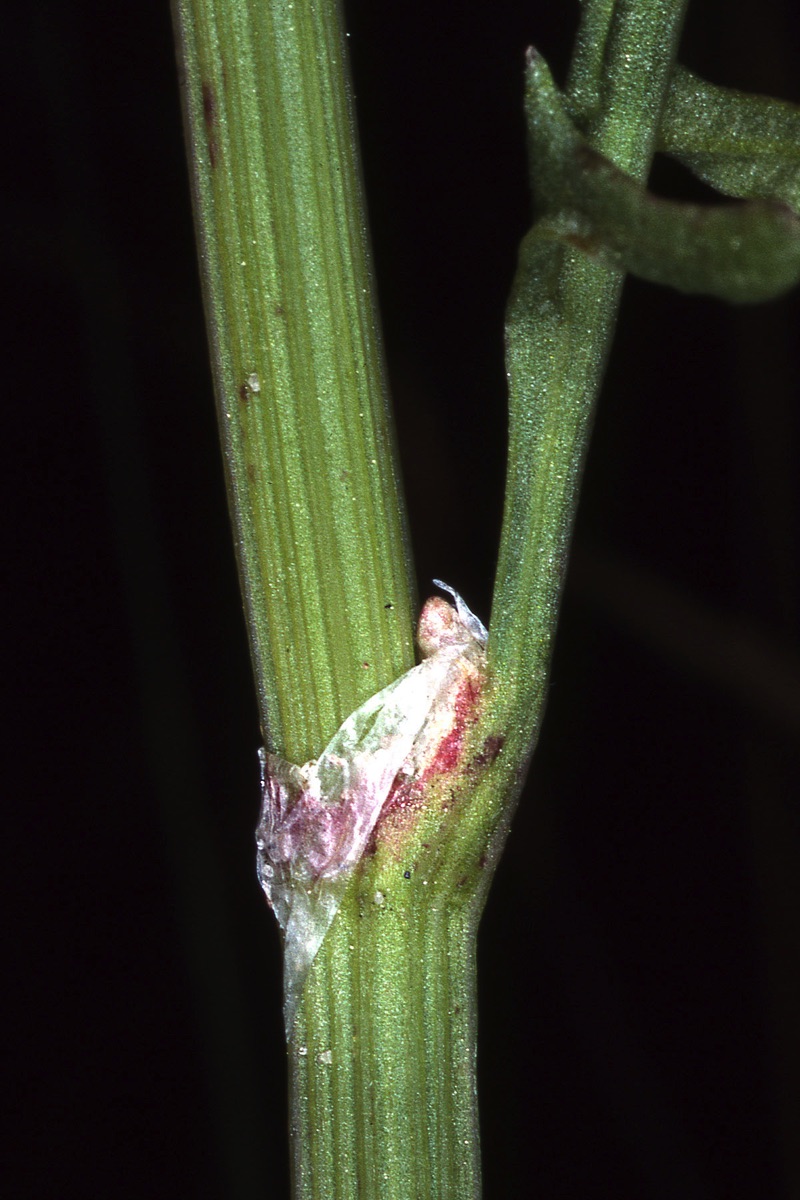
Rumex hastatulus; ocrea pulled downward to make it more apparent
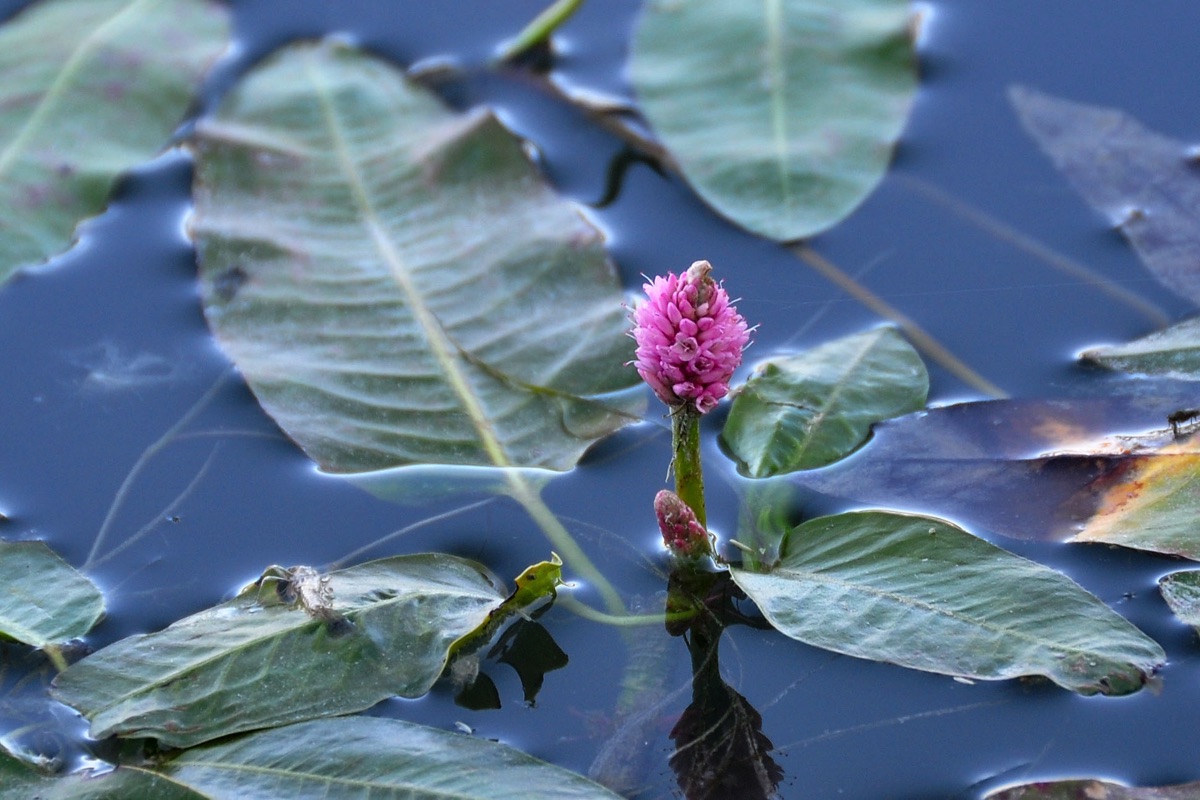
Polygonum amphibium

Polygonum setaceum

Polygonum setaceum
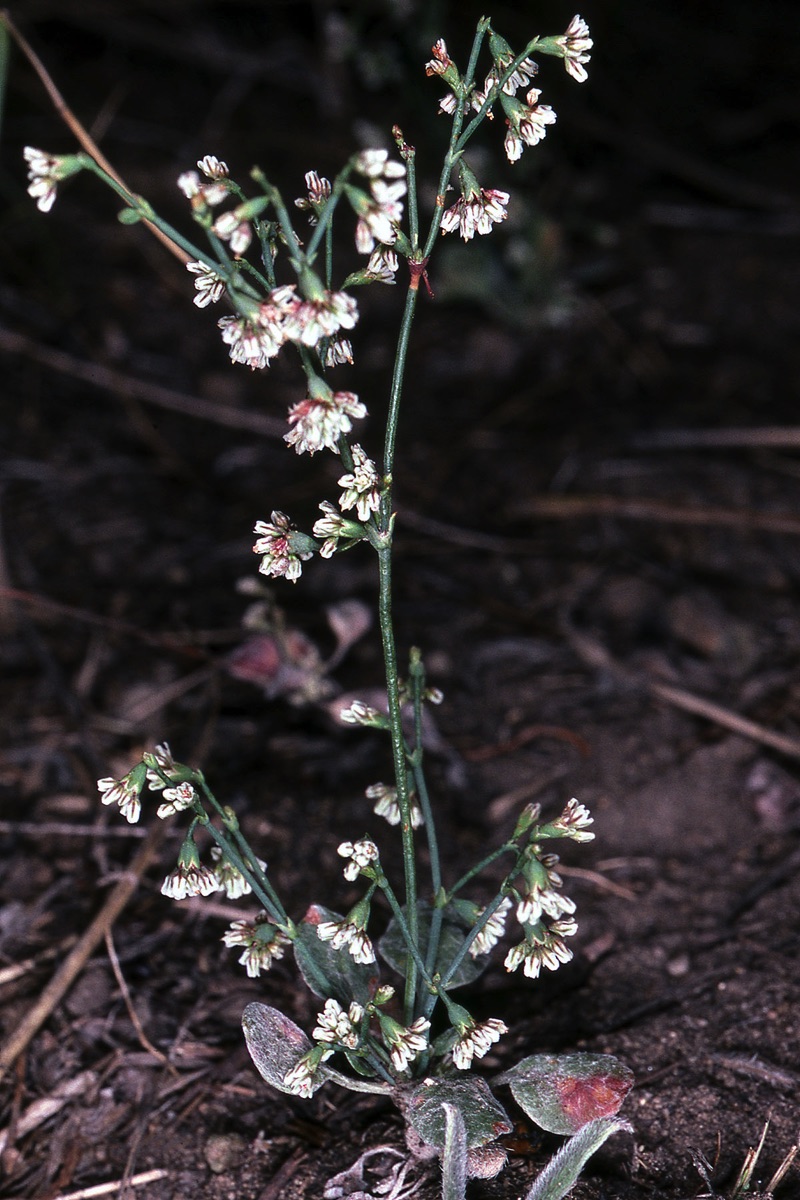
Eriogonum cernum
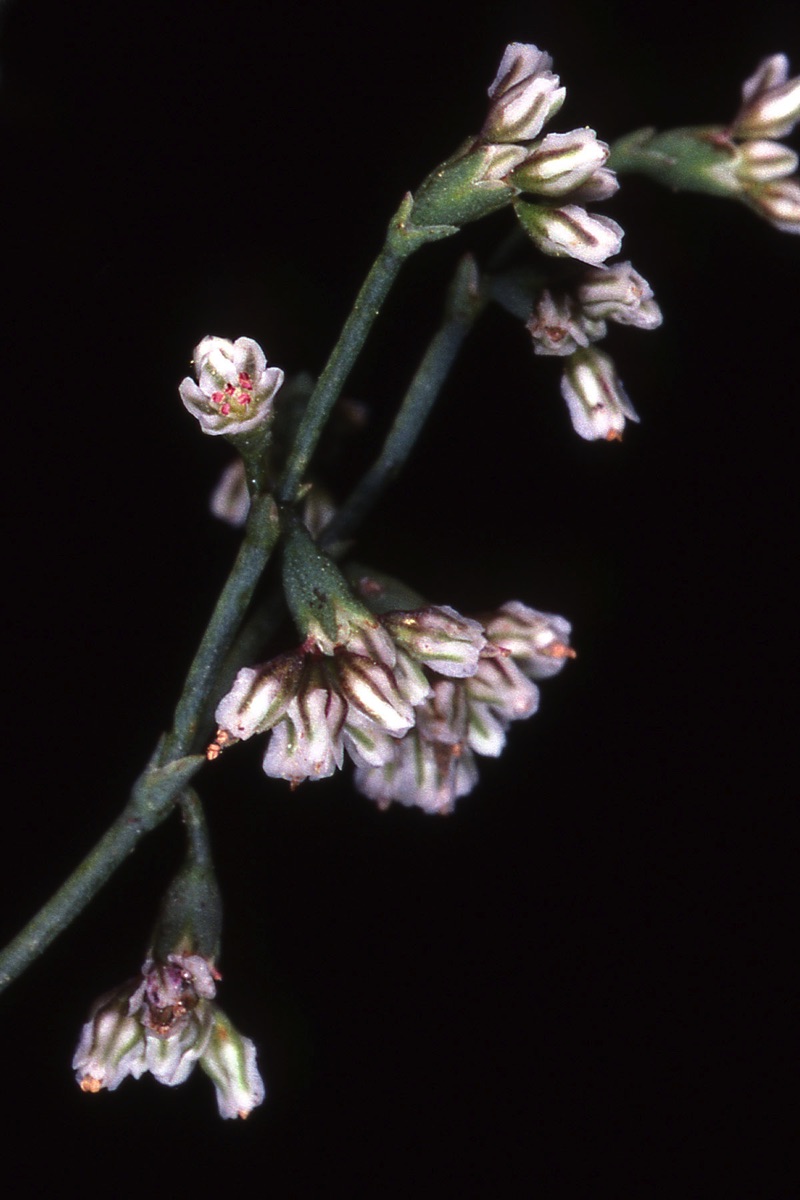
Eriogonum cernum
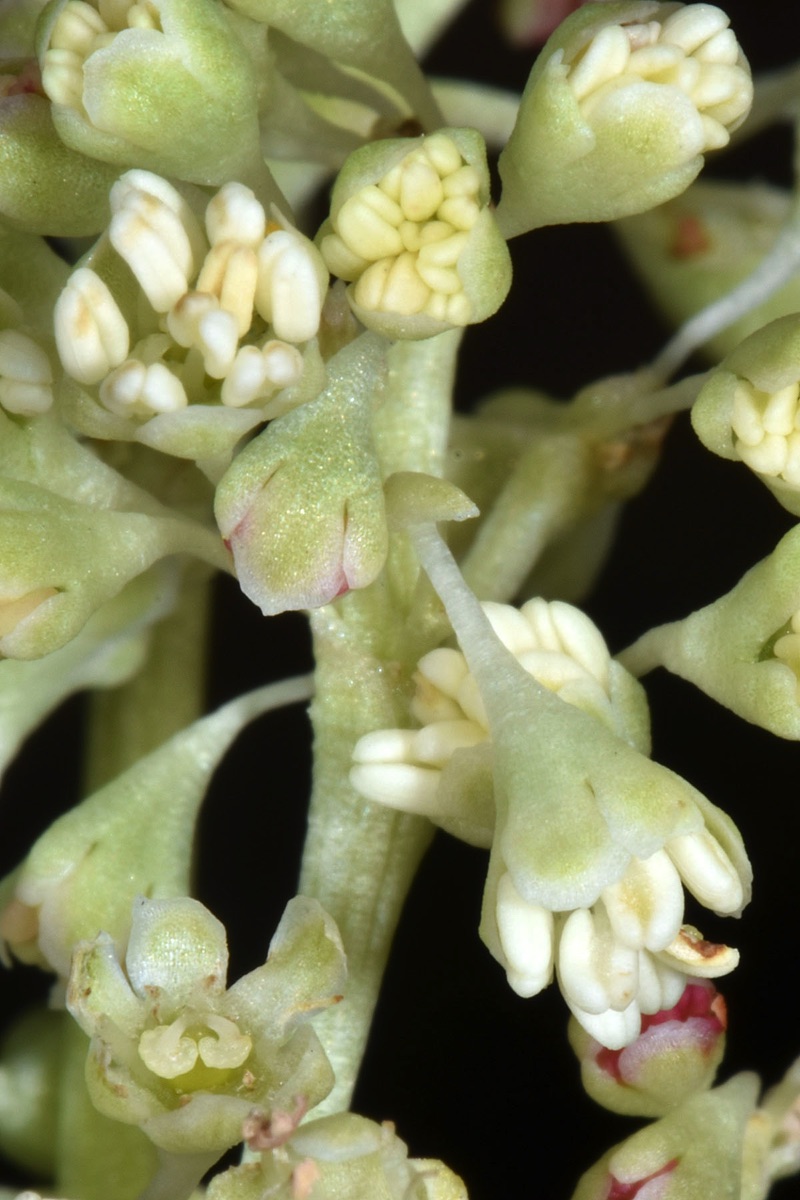
Rheum (rhubarb). The flower in upper left, just opening, shows nine anthers.
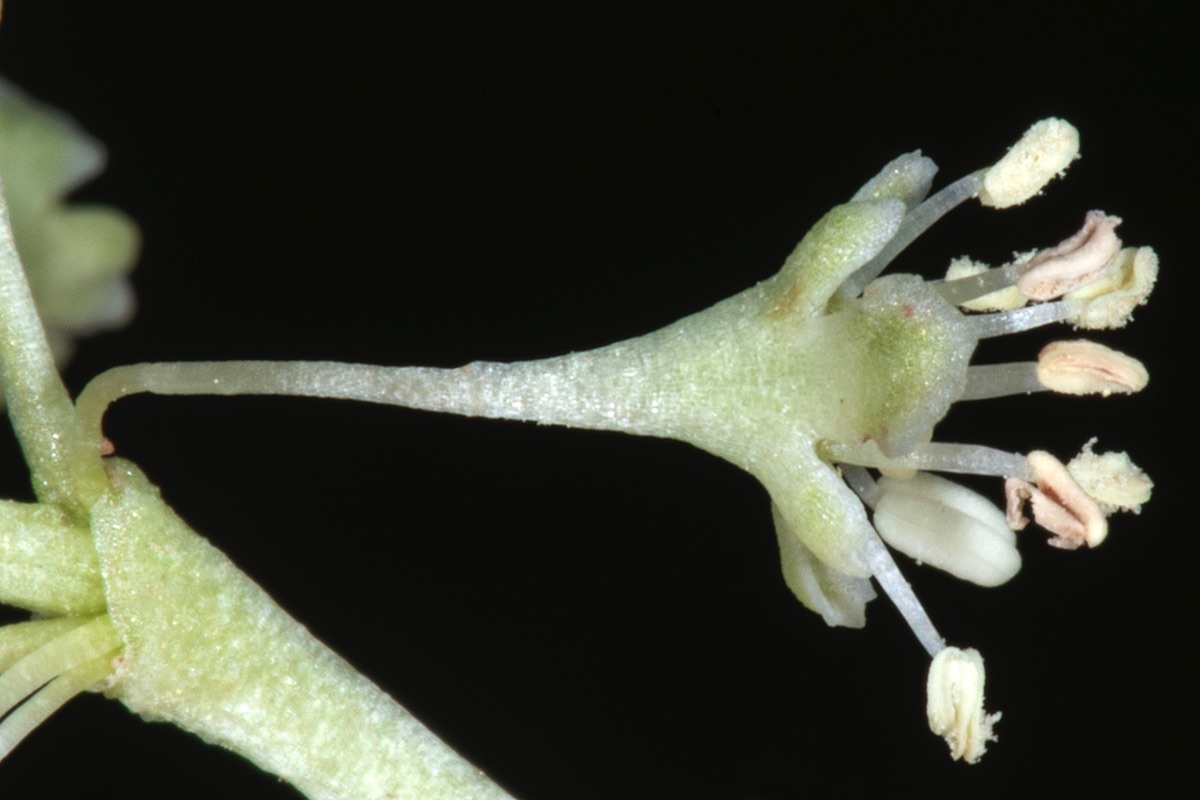
Rheum (rhubarb). There are 3 smaller and 3 larger tepals, but a key may refer to a single whorl.
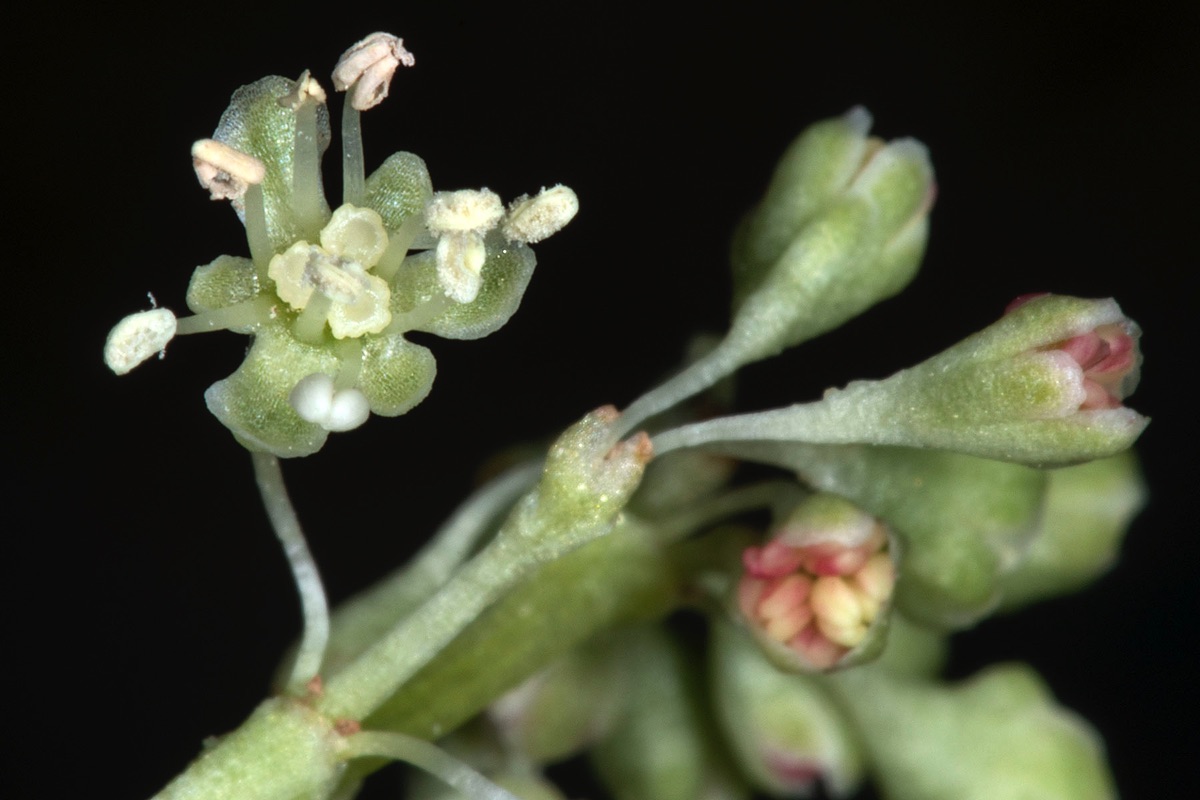
Rheum (rhubarb). All six tepals and the 3-lobed stigma are clear, but you have to look closely to find the ninth anther, which is attached at lower left but positioned right in middle of stigmas in this photo
Polyg01.png
Polyg02.png
Polyg03.png
Polyg04.png