Contemporary Circumscription Compared with A Utah Flora 4th ed.

Bio430

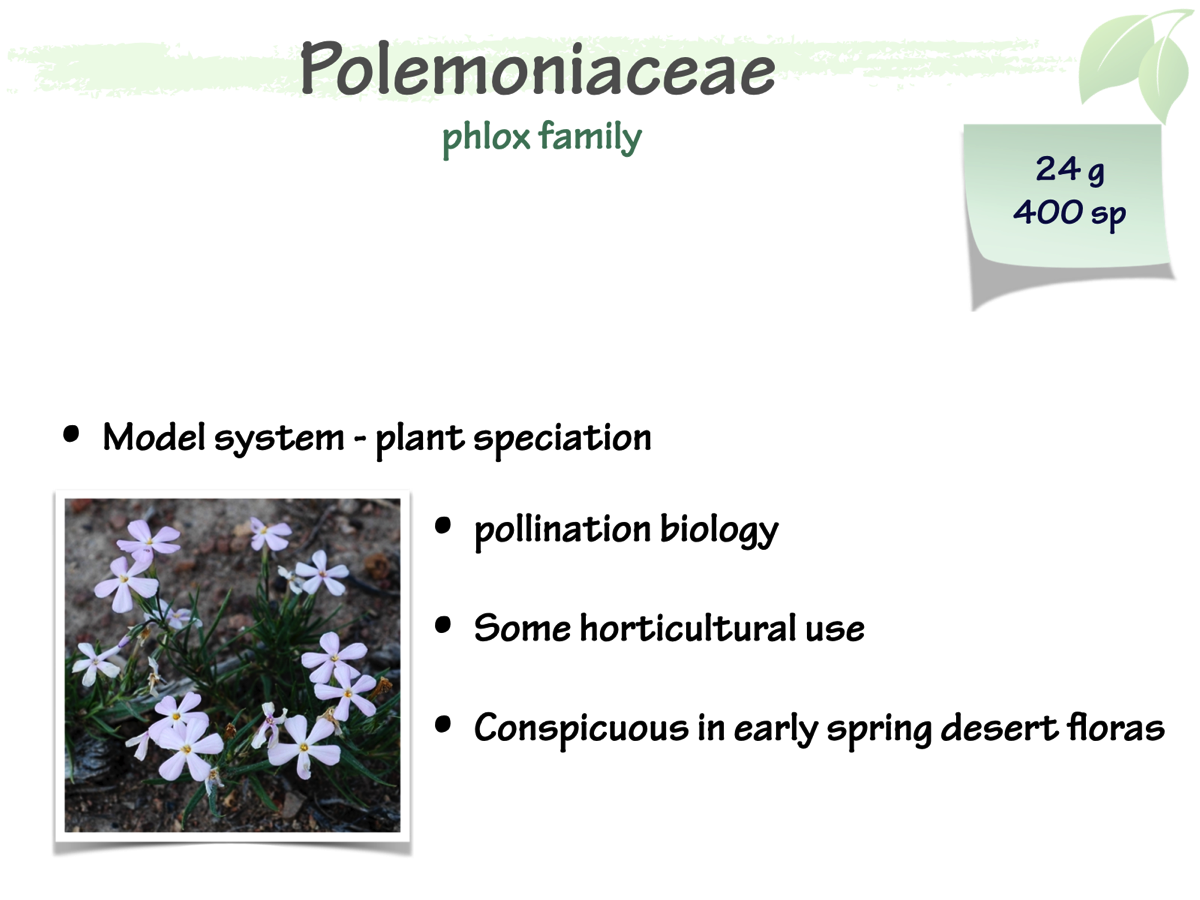
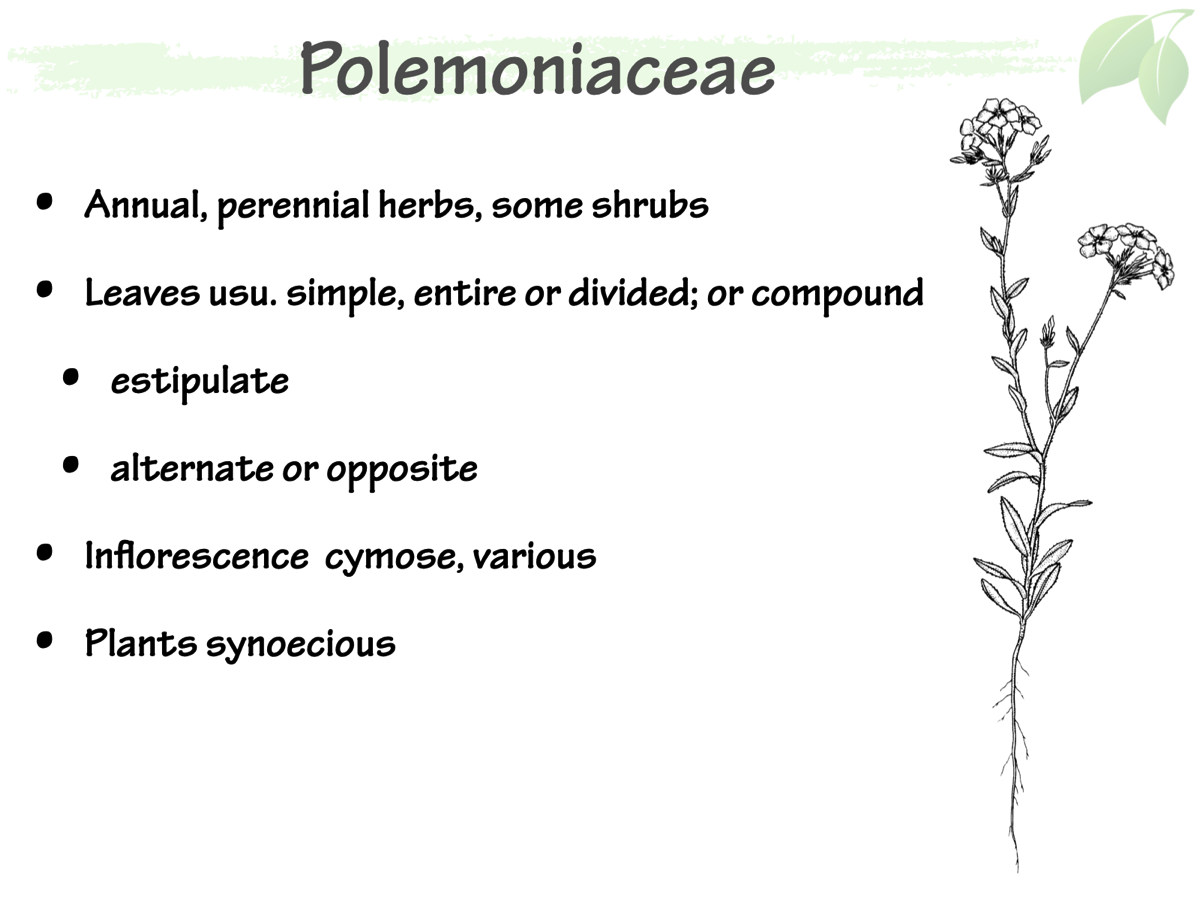
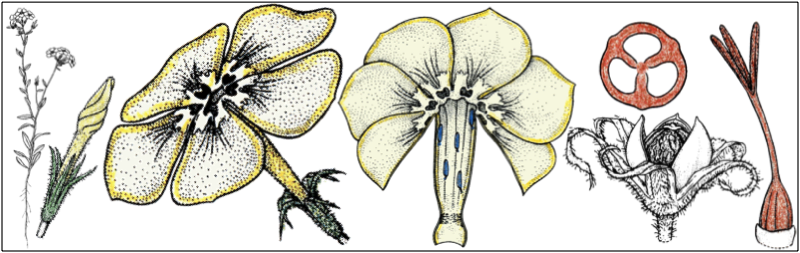
Polemoniaceae

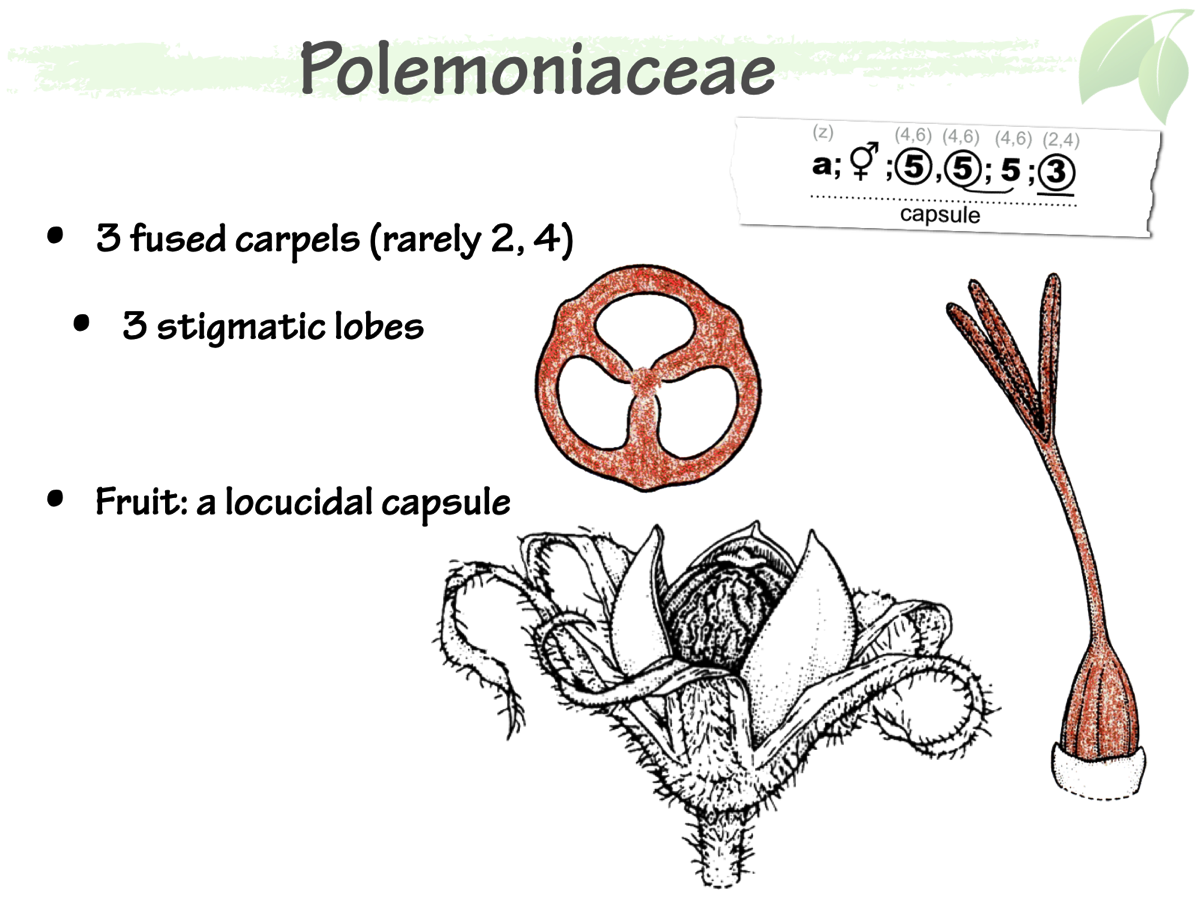
No differences at the family level; Many important differences at the genus level.  While Polemoniaceae is characterized as having 3 carpels, there are a few species with either 2 or 4 carpels that are impossible to key to family using A Utah Flora because its family key only works for plants with 3 carpels.  Sight recognition to family based on overall ghestalt and other features is helpful :-)


Key Features

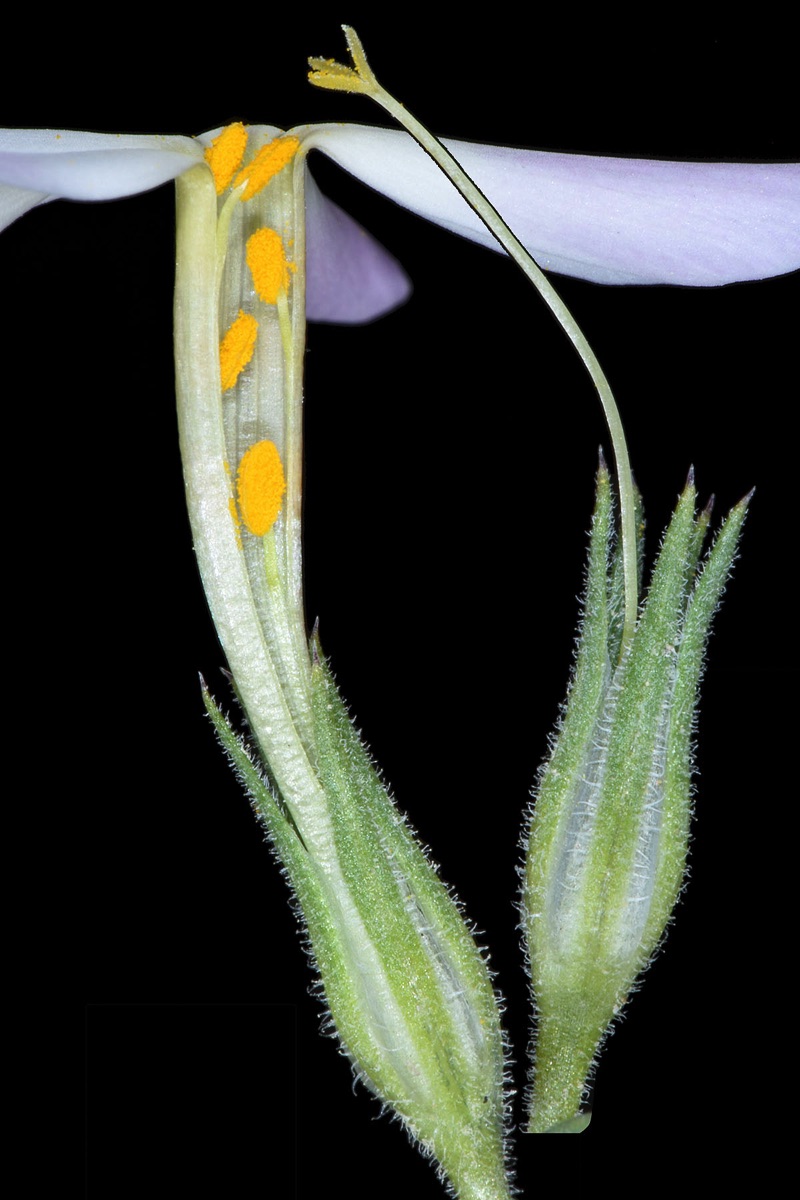
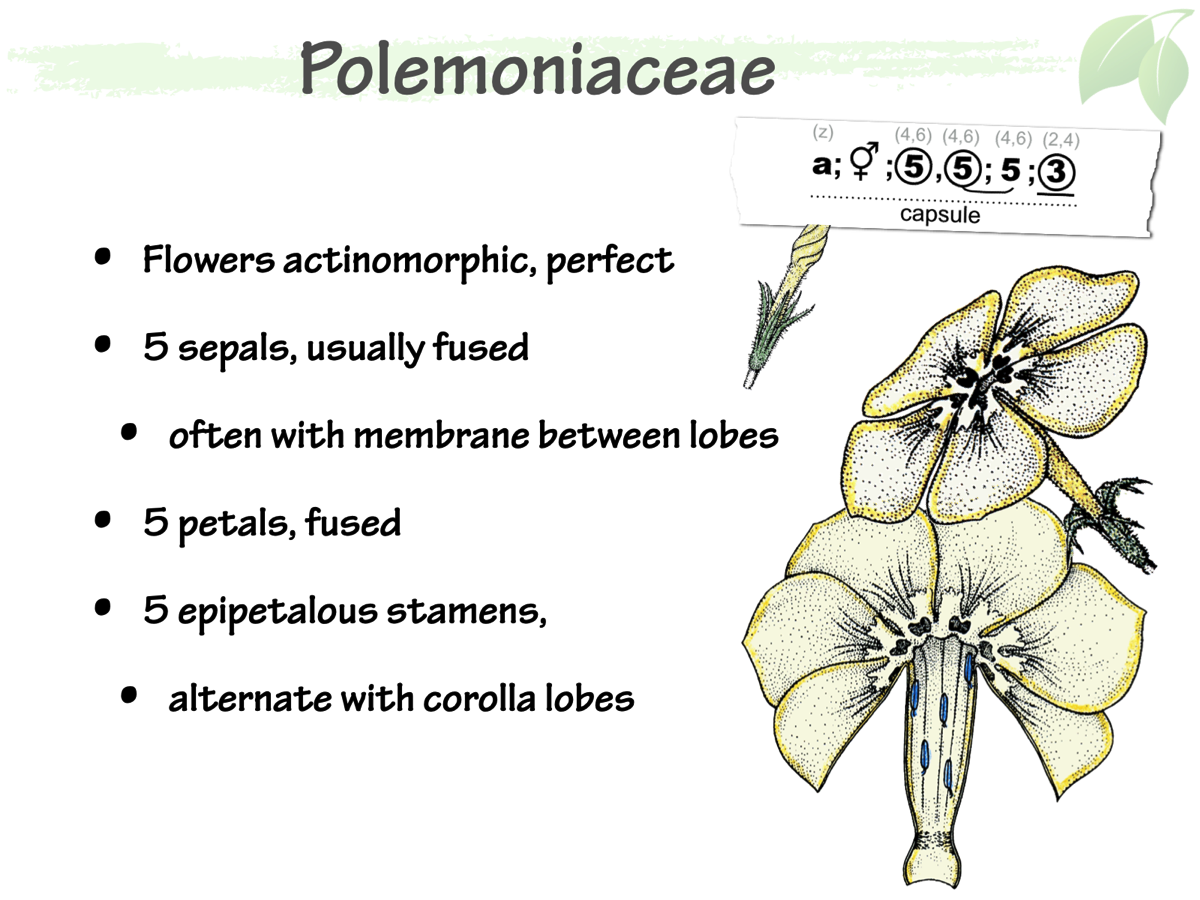
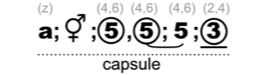
Polemoniaceae is like Solanaceae and Convolvulaceae, etc, in having 5 fused petals and 5 epipetalous stamens alternate with the corolla lobes. However, instead of just 2 carpels, Polemoniaceae has 3.  Historically, emphasis on the stamens led most taxonomists to consider this family related to Solanceae; in reality, the 3 carpelate gynoecium is more important and relationships are with families allied to Ericaceae.
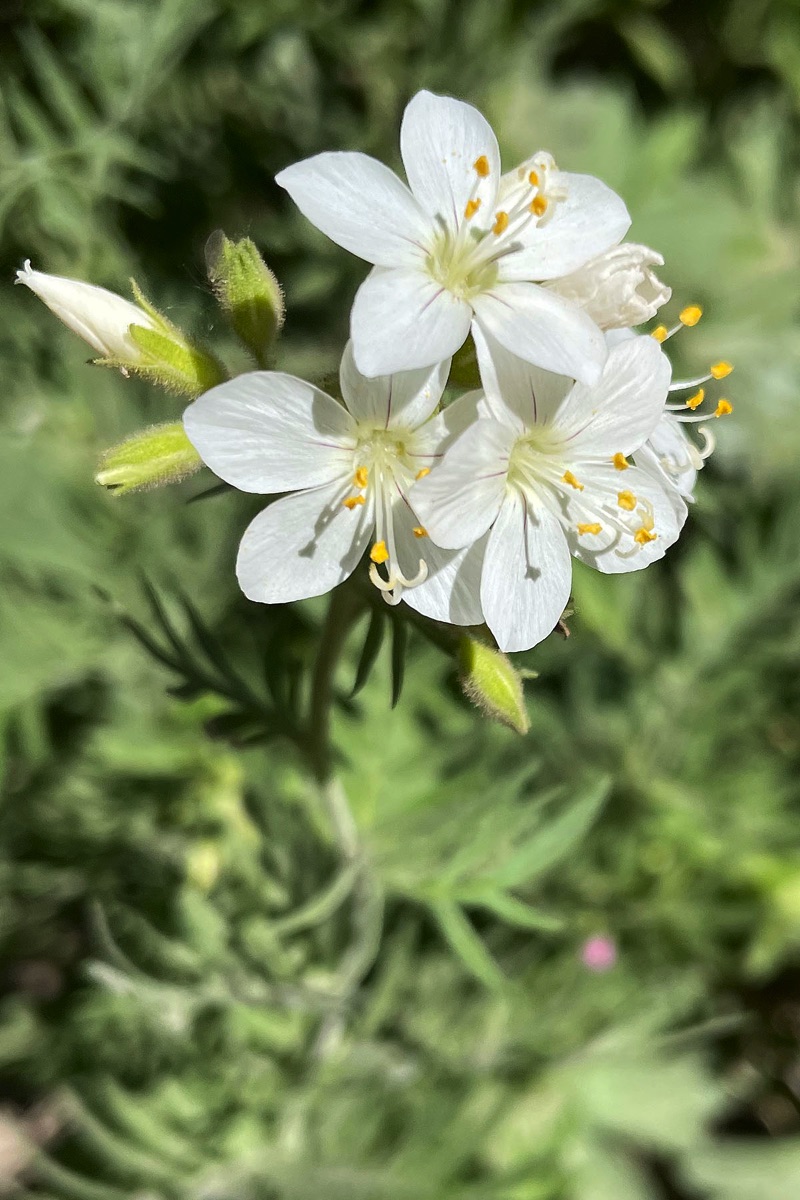
Polemonium
Polemonium
Phlox longifolia with corolla split open to show epipetalous stamens, and corolla removed to show three lobed stigma
Phlox
Phlox
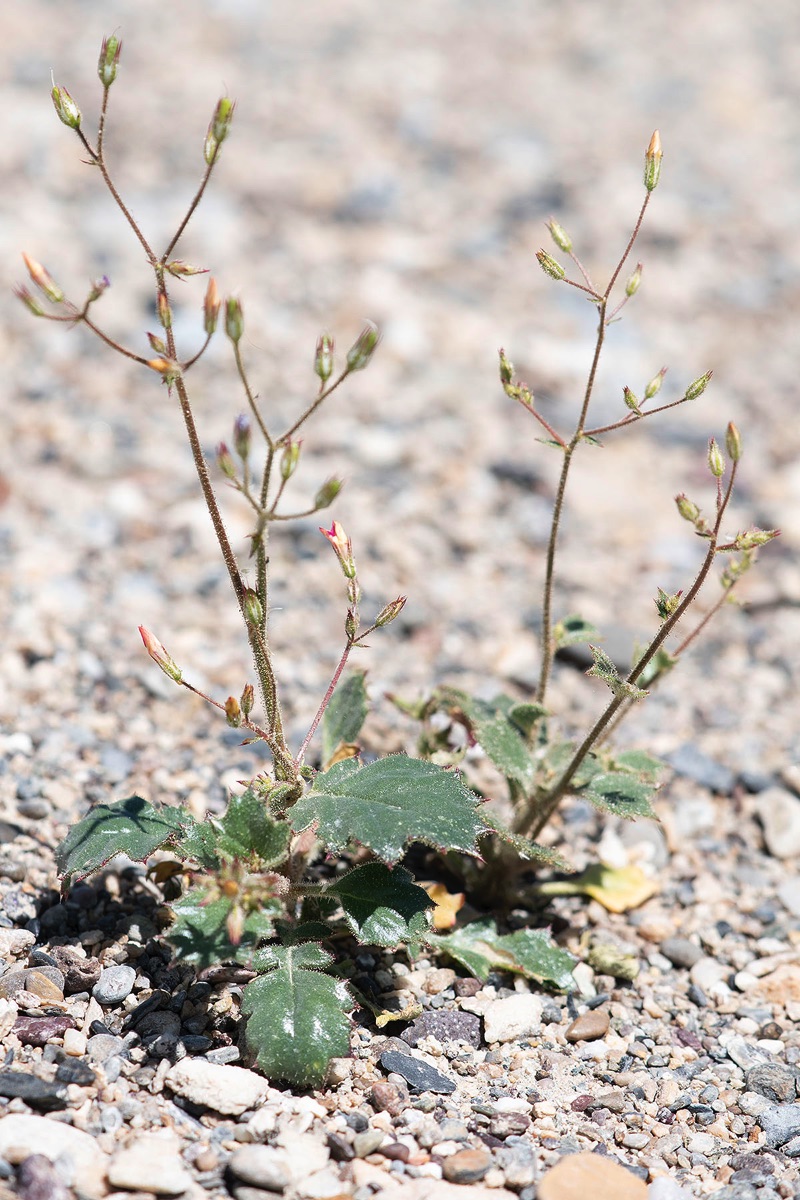
Aliciella latifolia - habit typical of many Aliciella and Gilia species
Aliciella
Aliciella
Aliciella
Aliciella
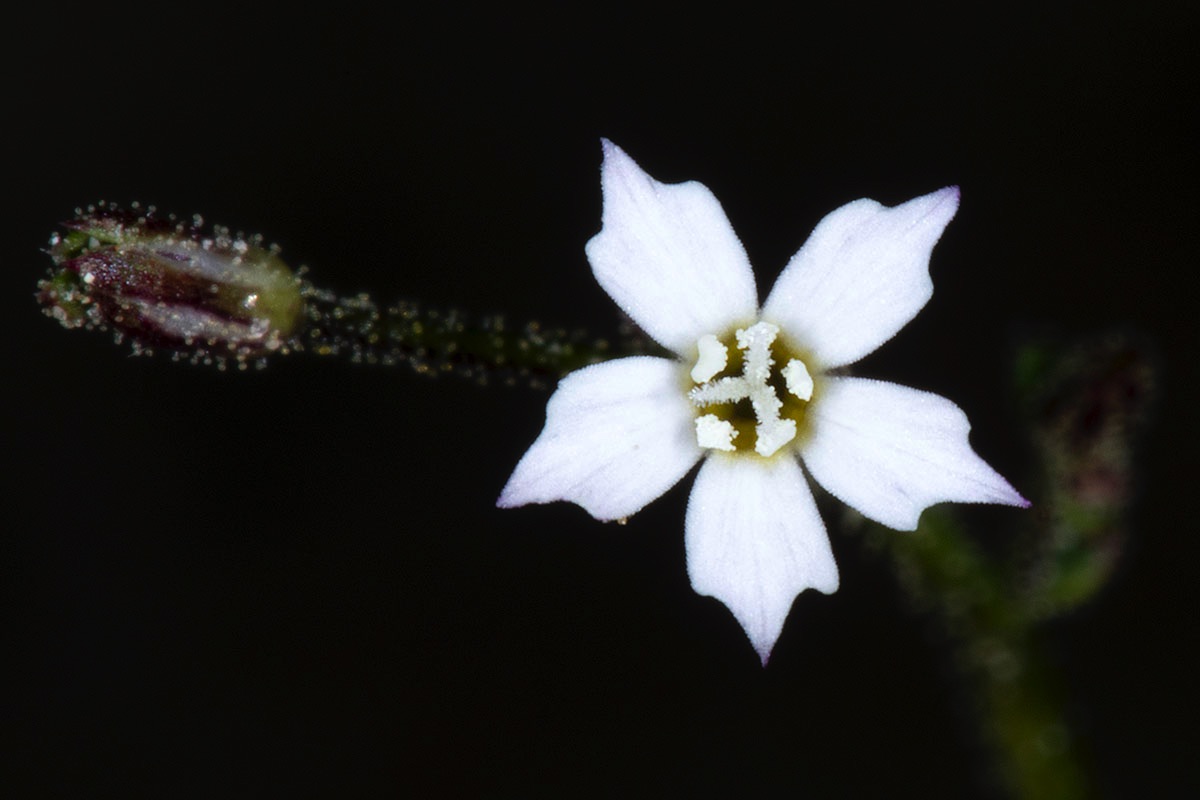
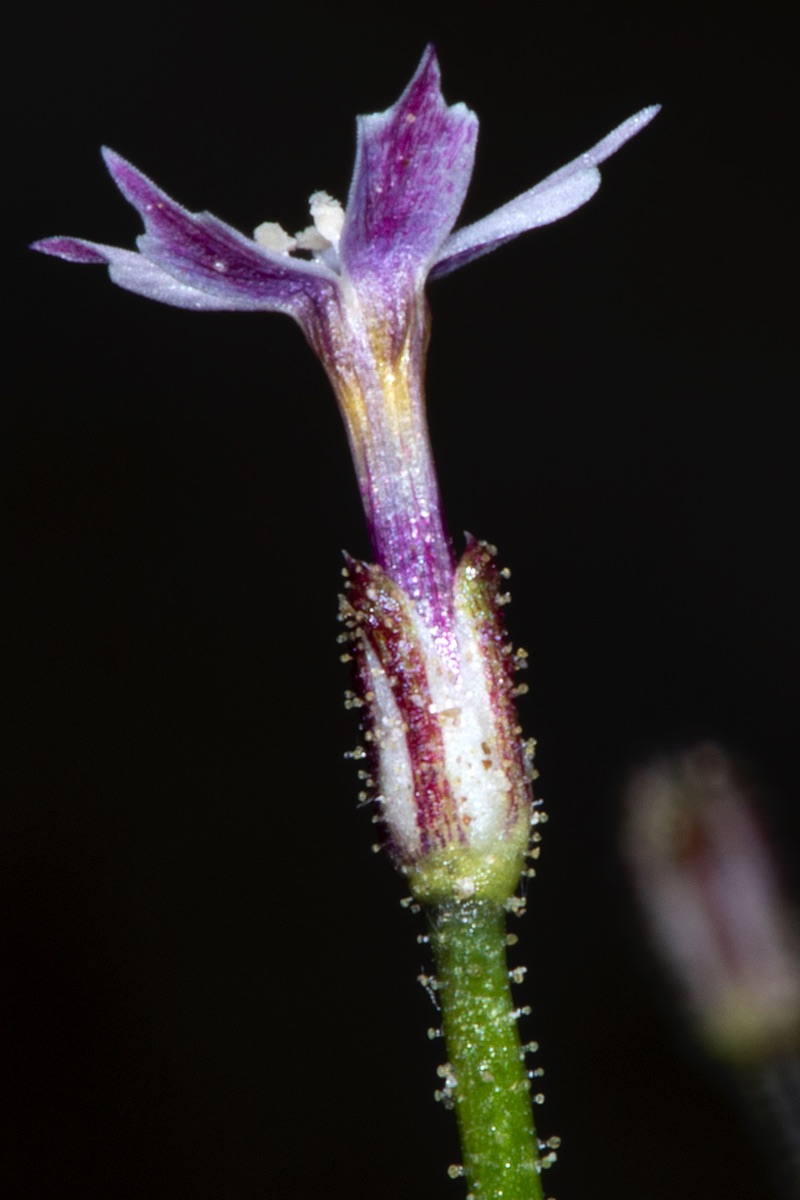
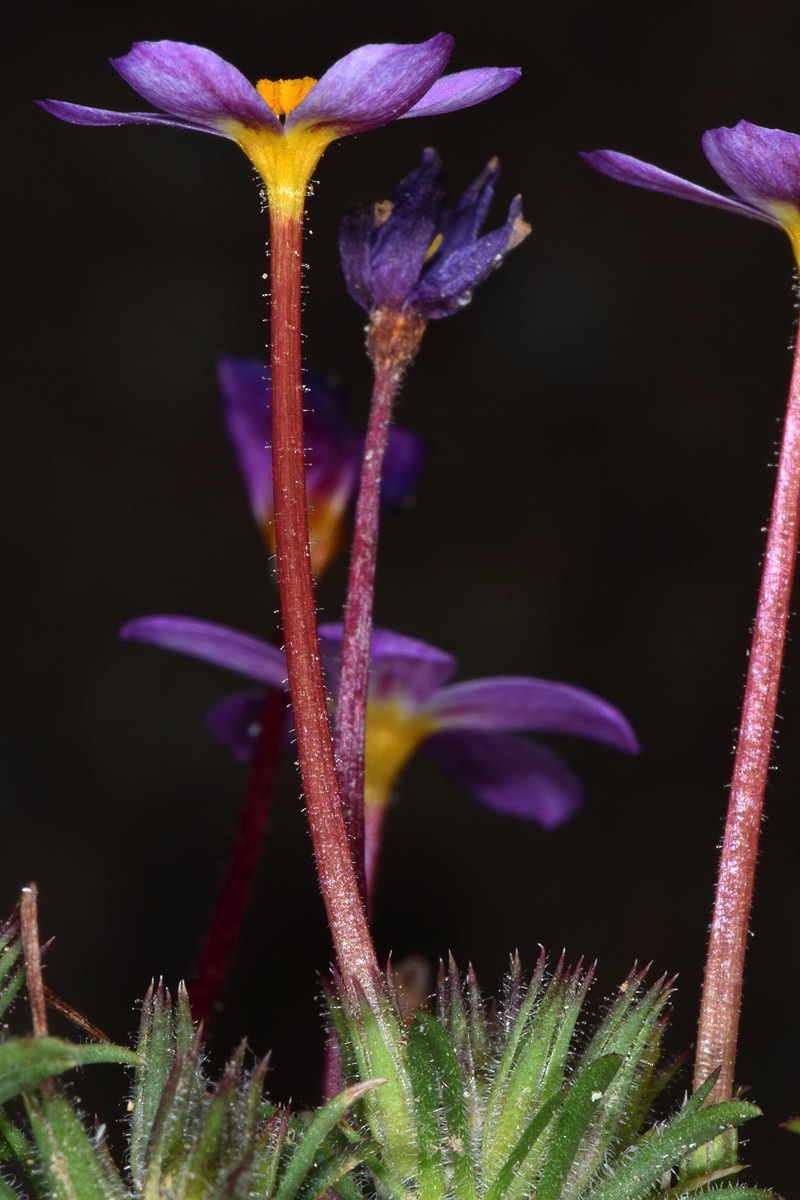
Linanthus demisus
Linanthus demisus
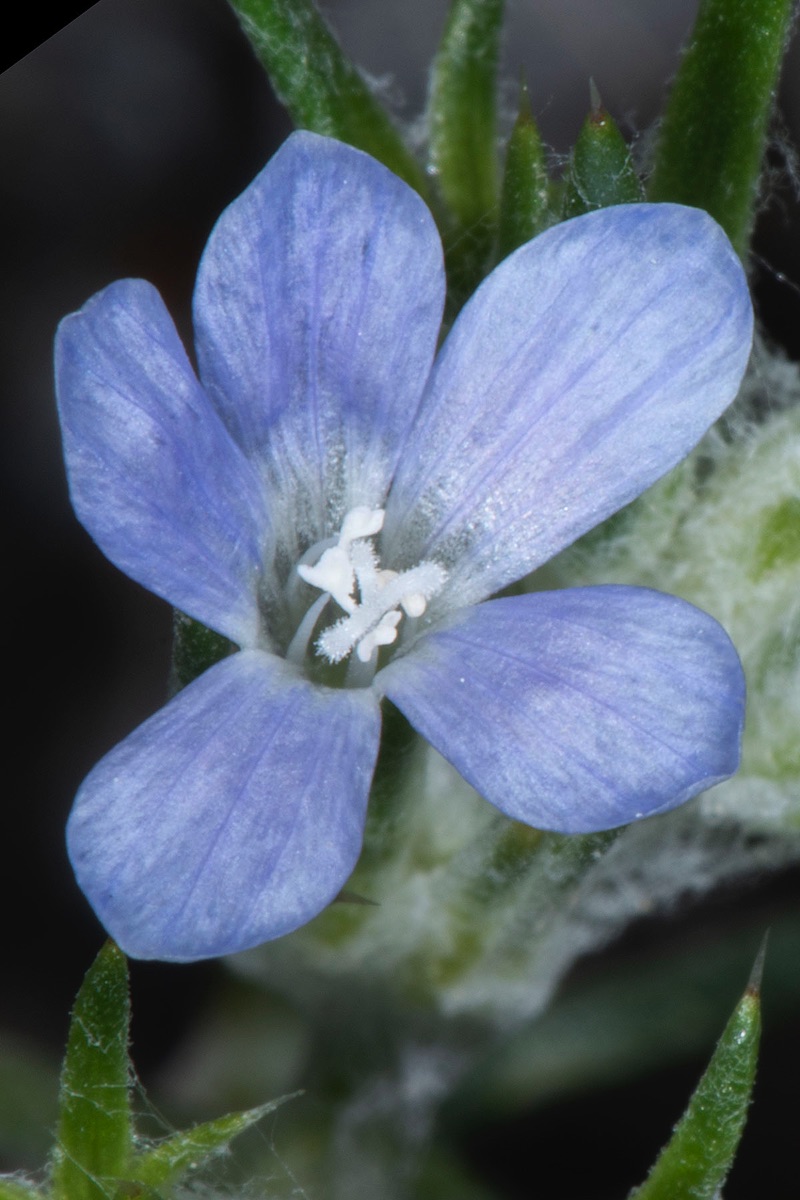
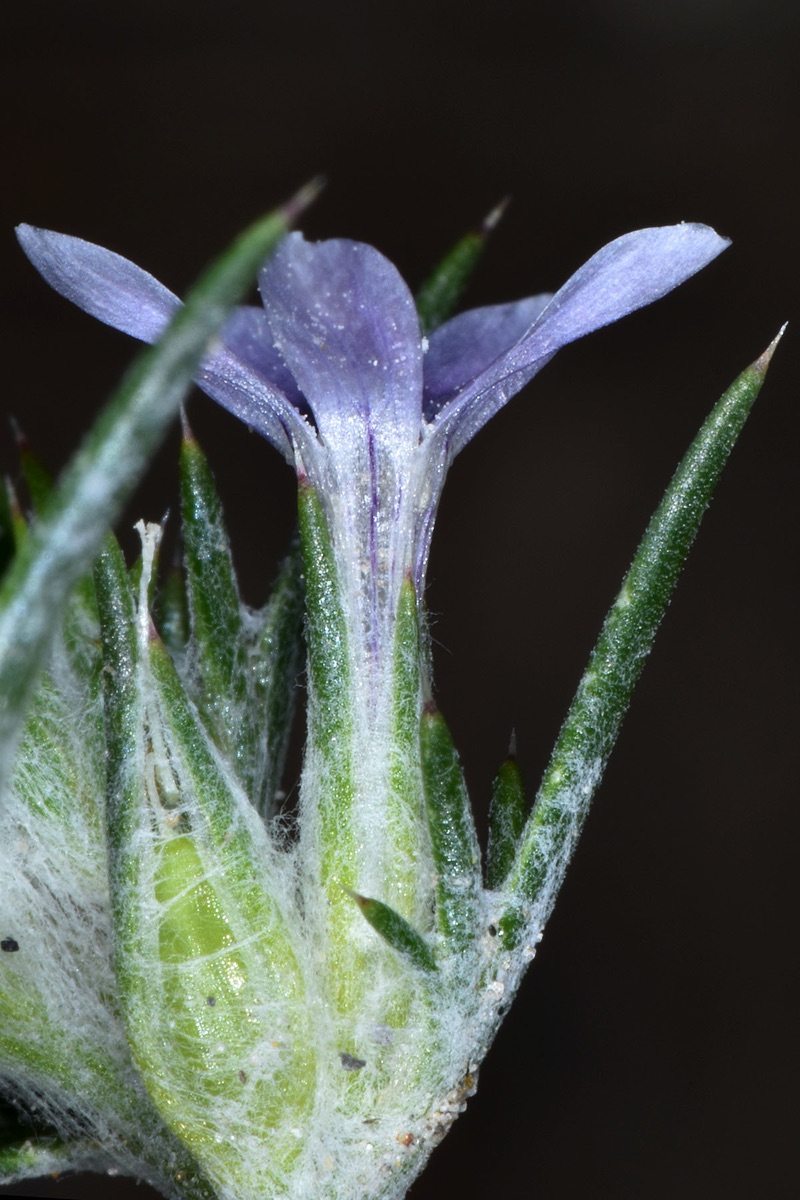
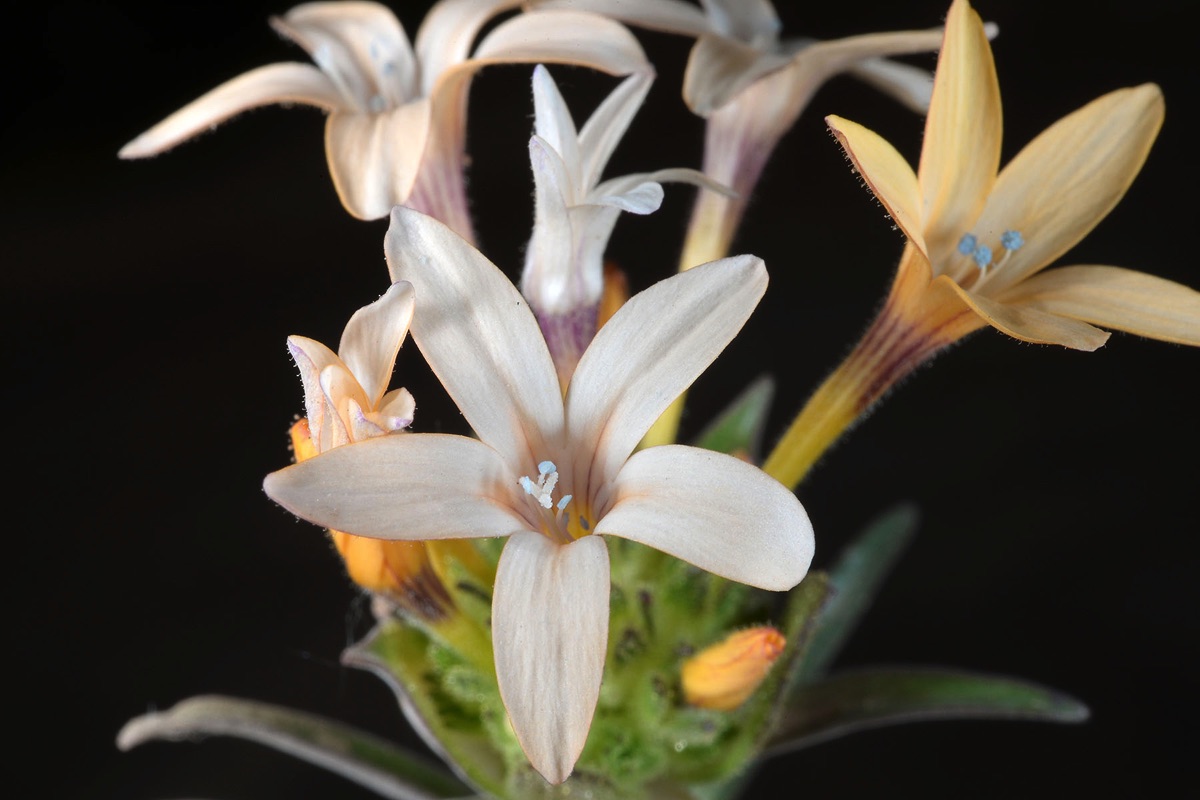
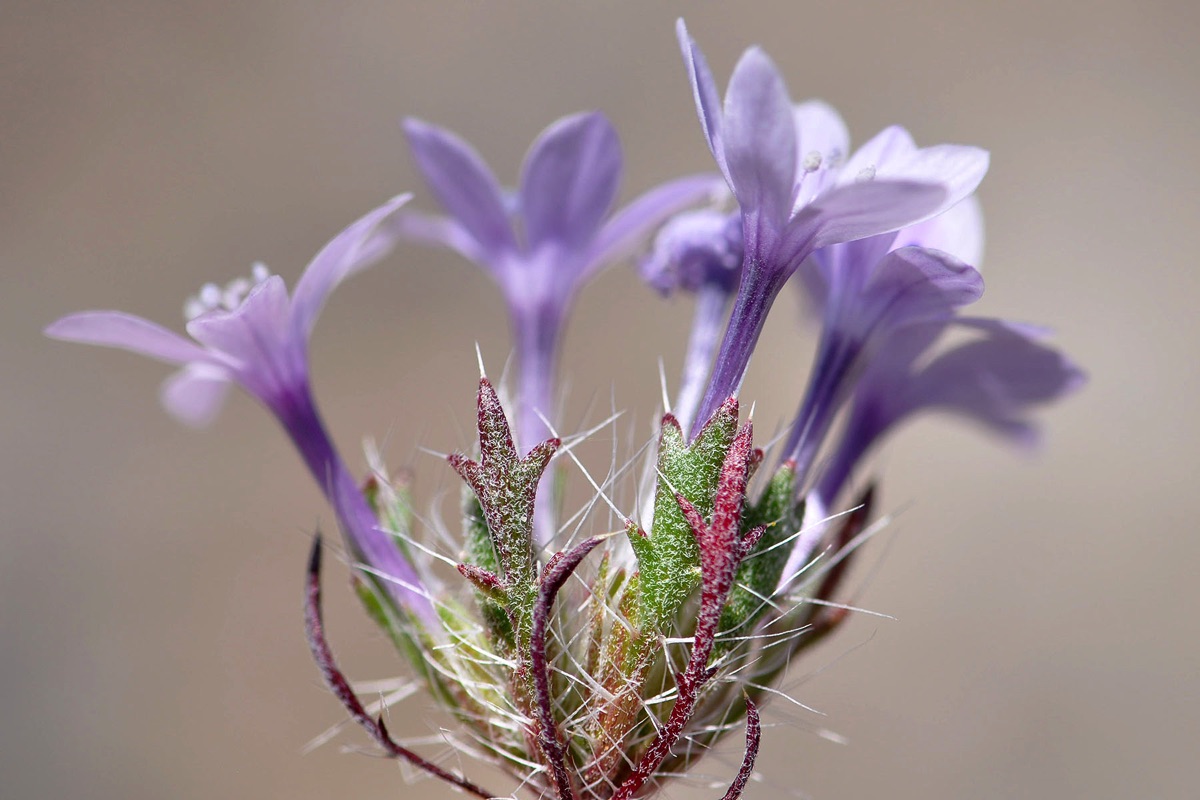
Eriastrum
Eriastrum
Eriastrum
Eriastrum
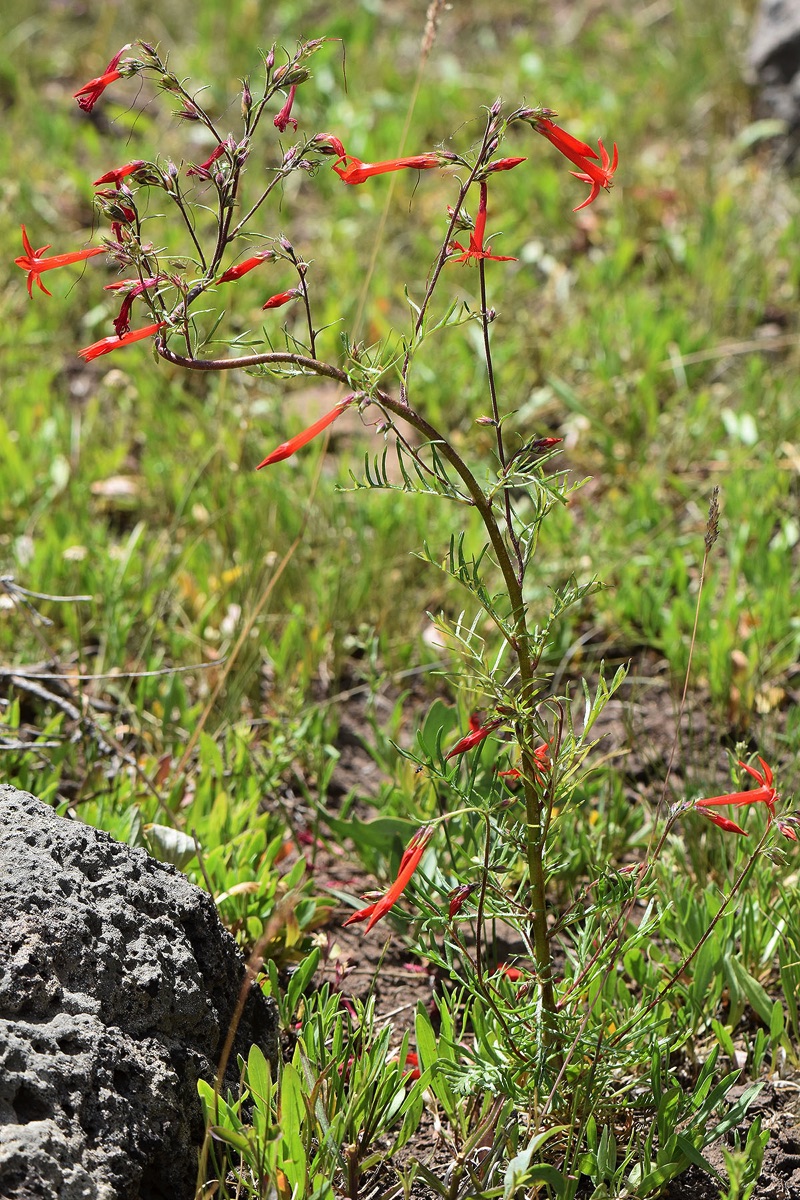
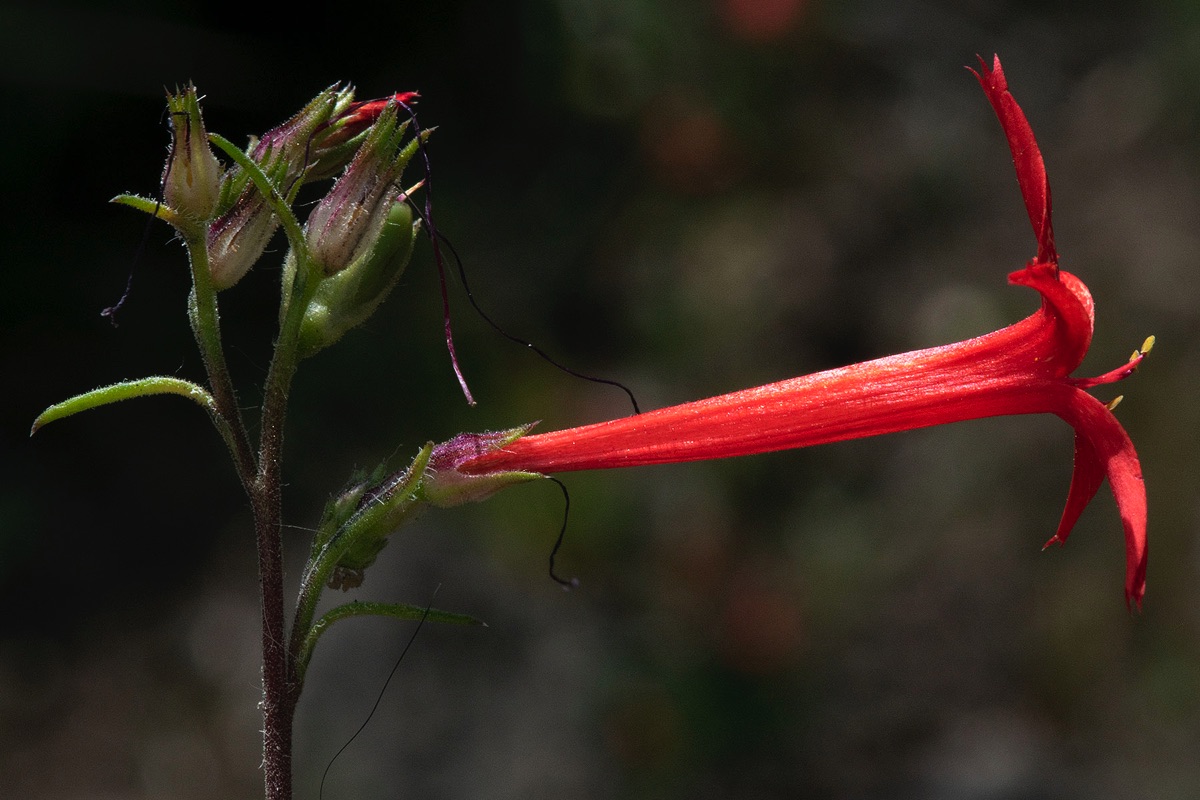
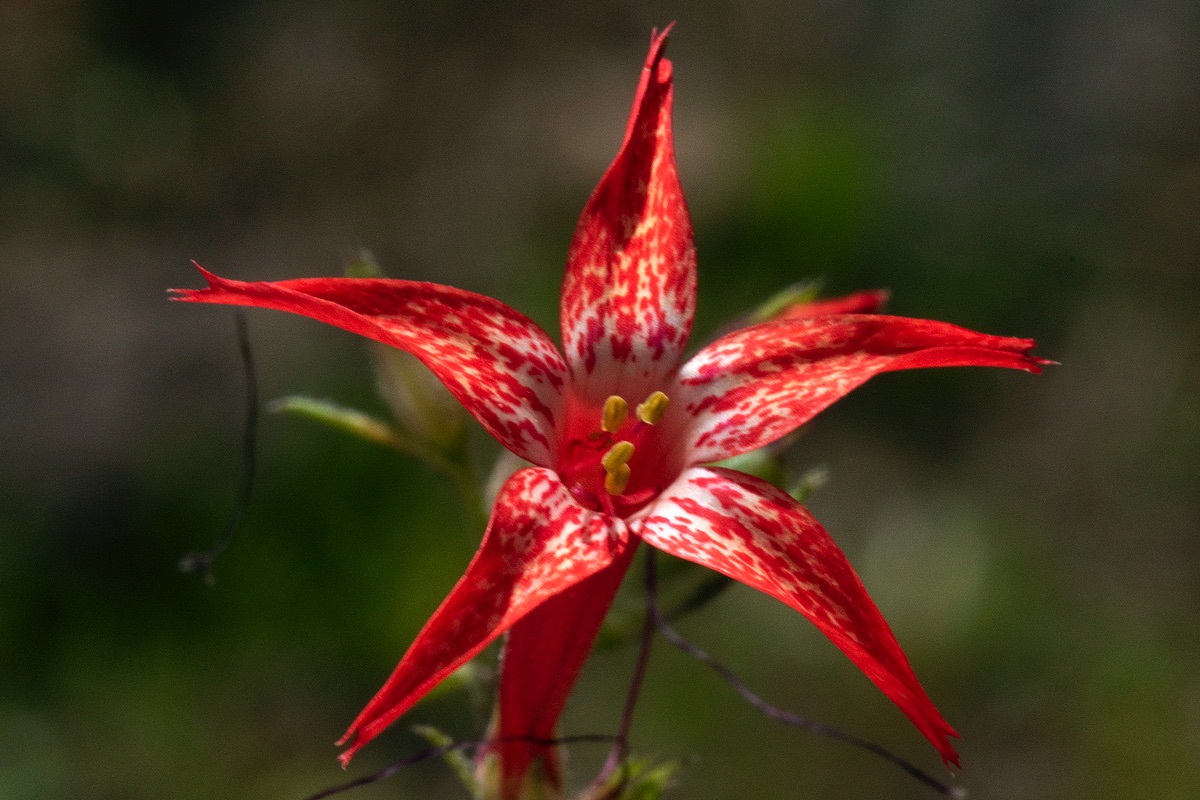
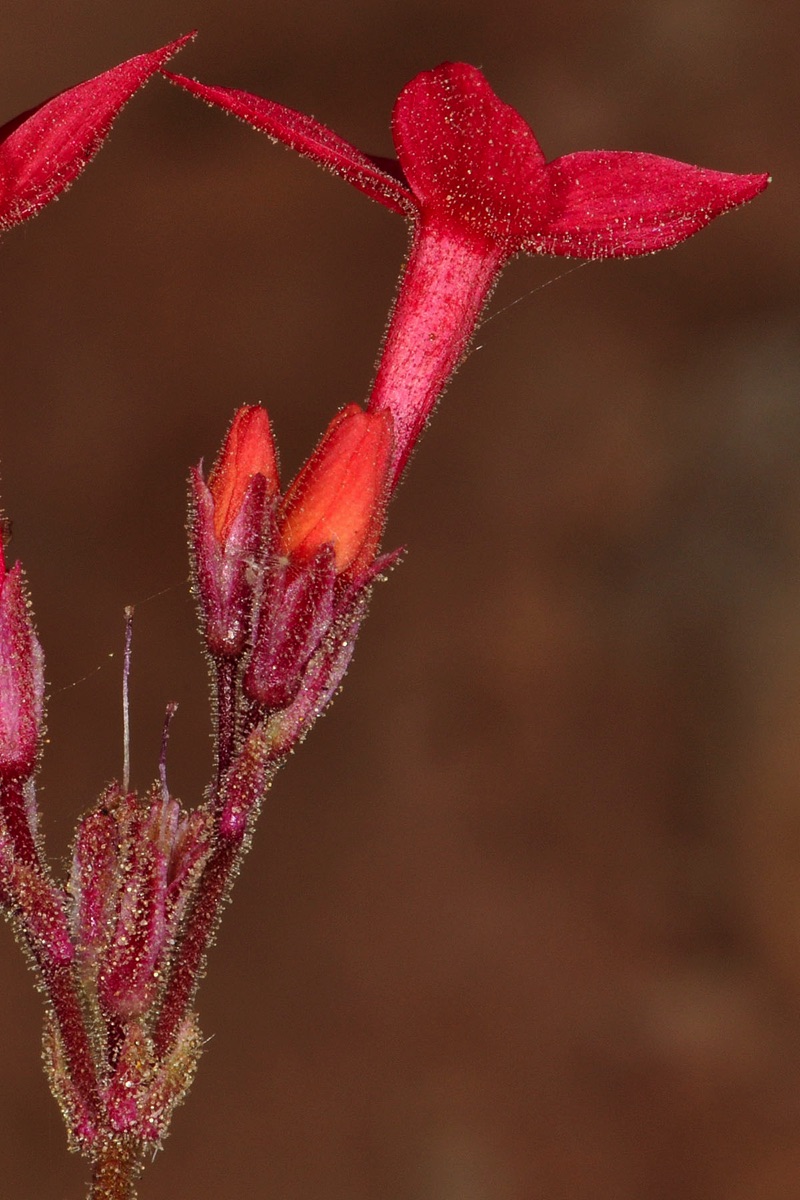
Ipomopsis aggregata
Ipomopsis aggregata
Ipomopsis aggregata
Ipomopsis aggregata
Ipomopsis aggregata
Ipomopsis aggregata
Leptosiphon
Leptosiphon
Collomia grandiflora
Collomia debilis - look close and count the stigma number
Collomia biflora
Collomia biflora
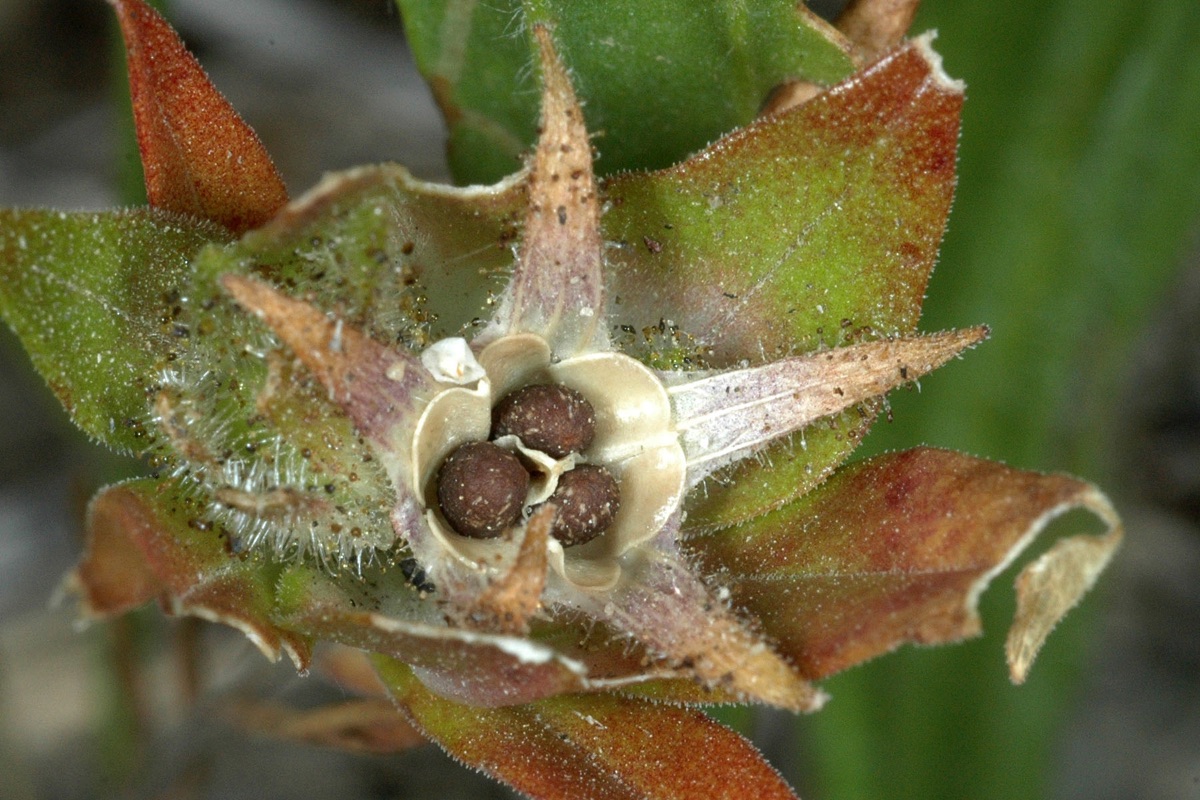
Collomia grandiflora - 3 carpellate capsule with one seed in each locule
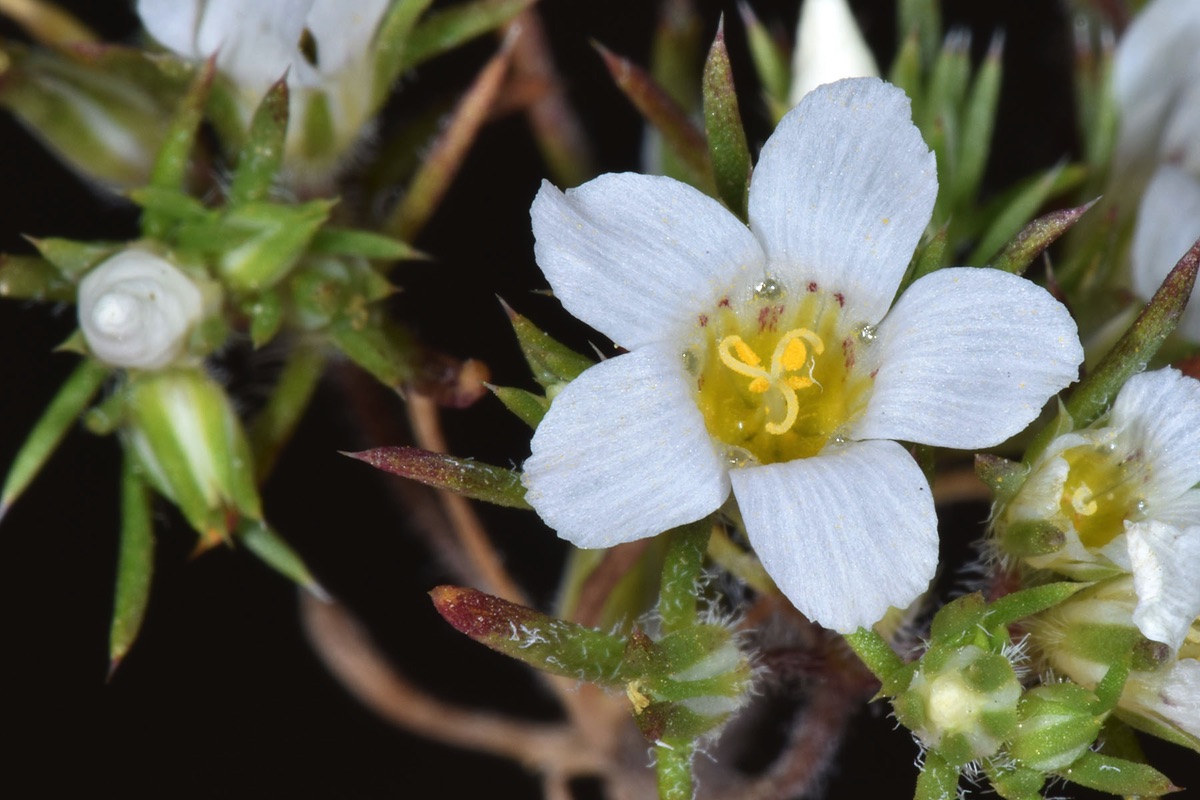
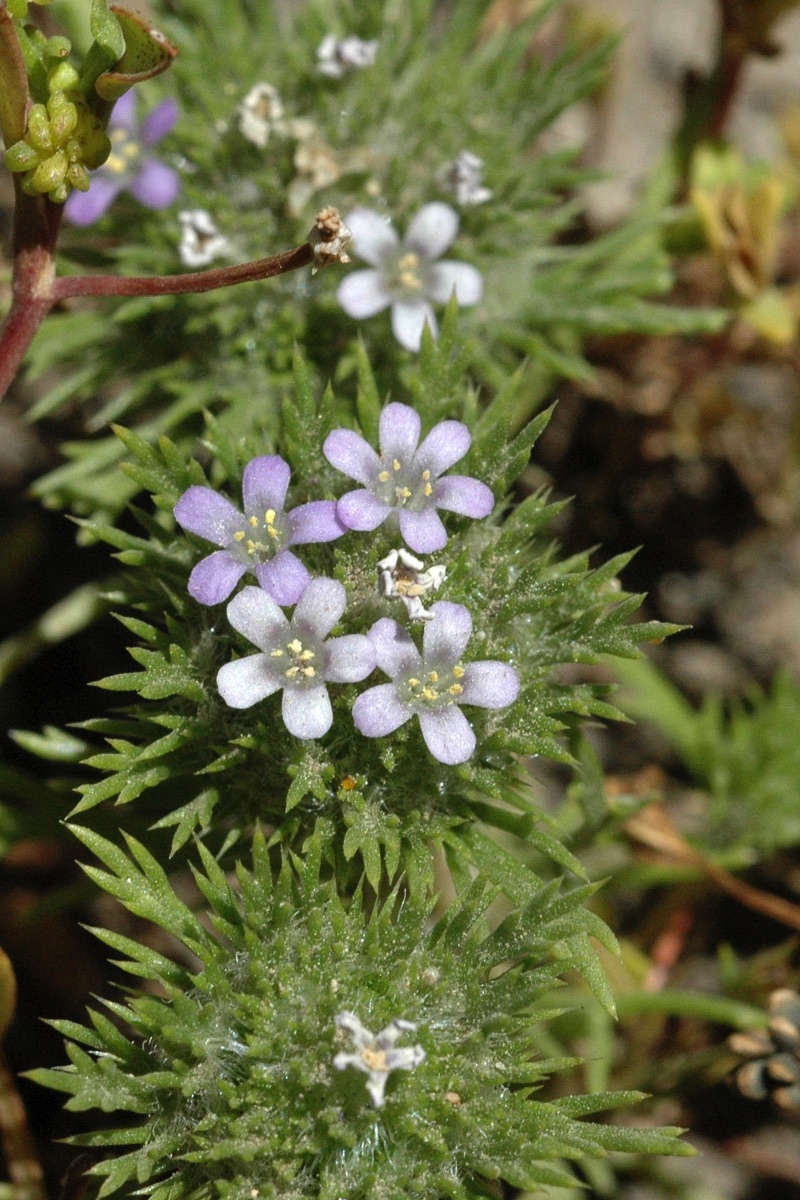
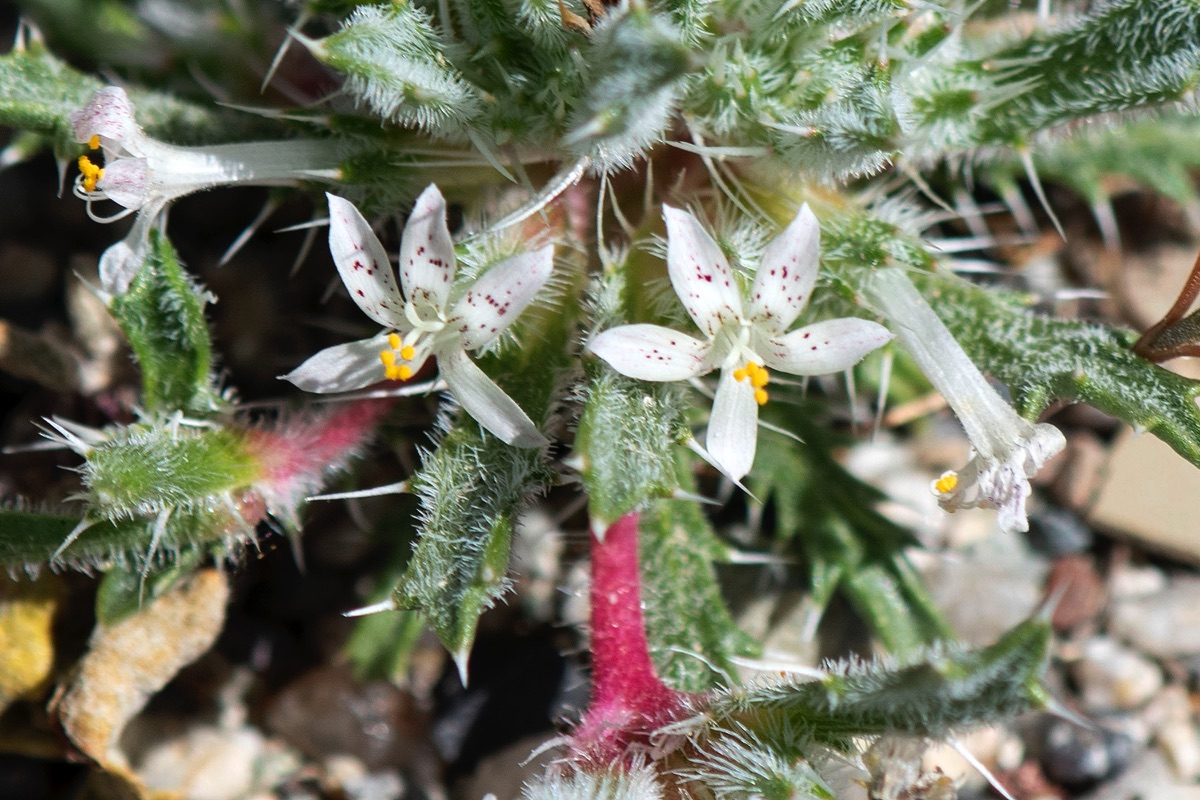
Langloisia
Langloisia
Langloisia
Langloisia
Langloisia
Langloisia
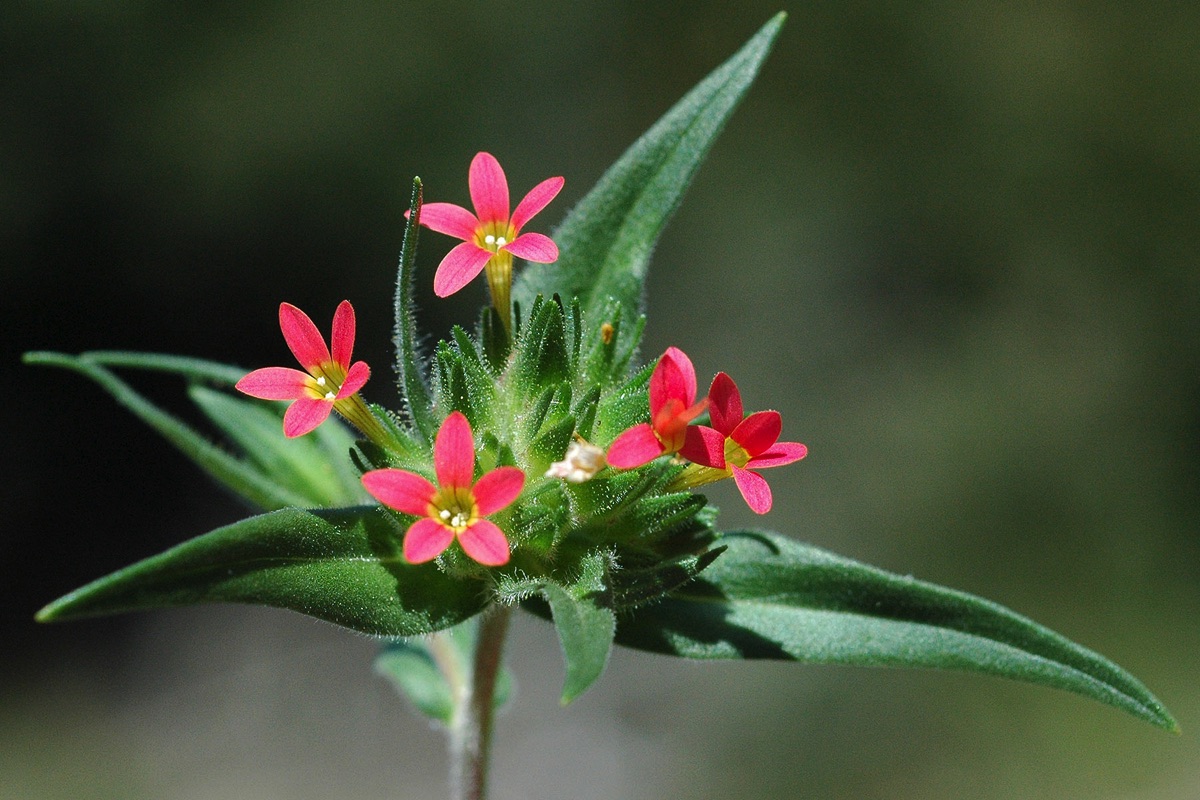
Navarretia involucrata from Argentina; a good example of how occasionally, an odd number of parts occur in a flower
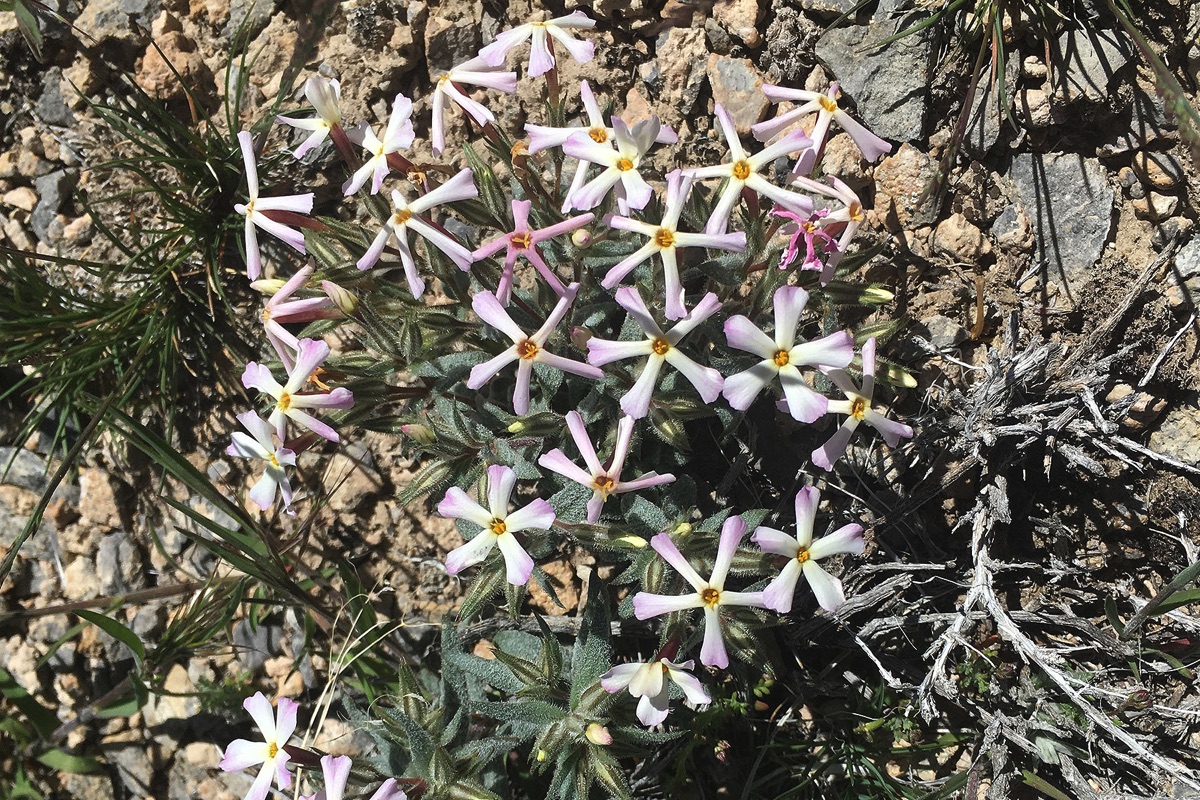
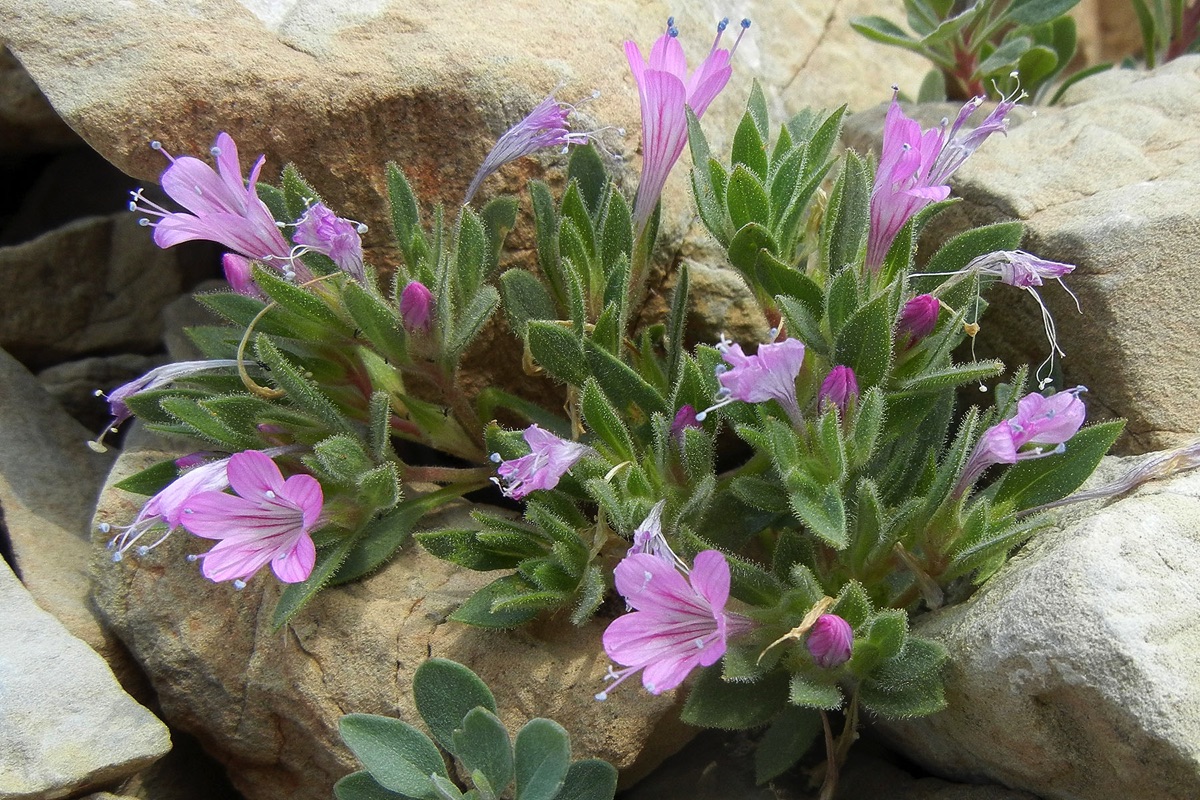
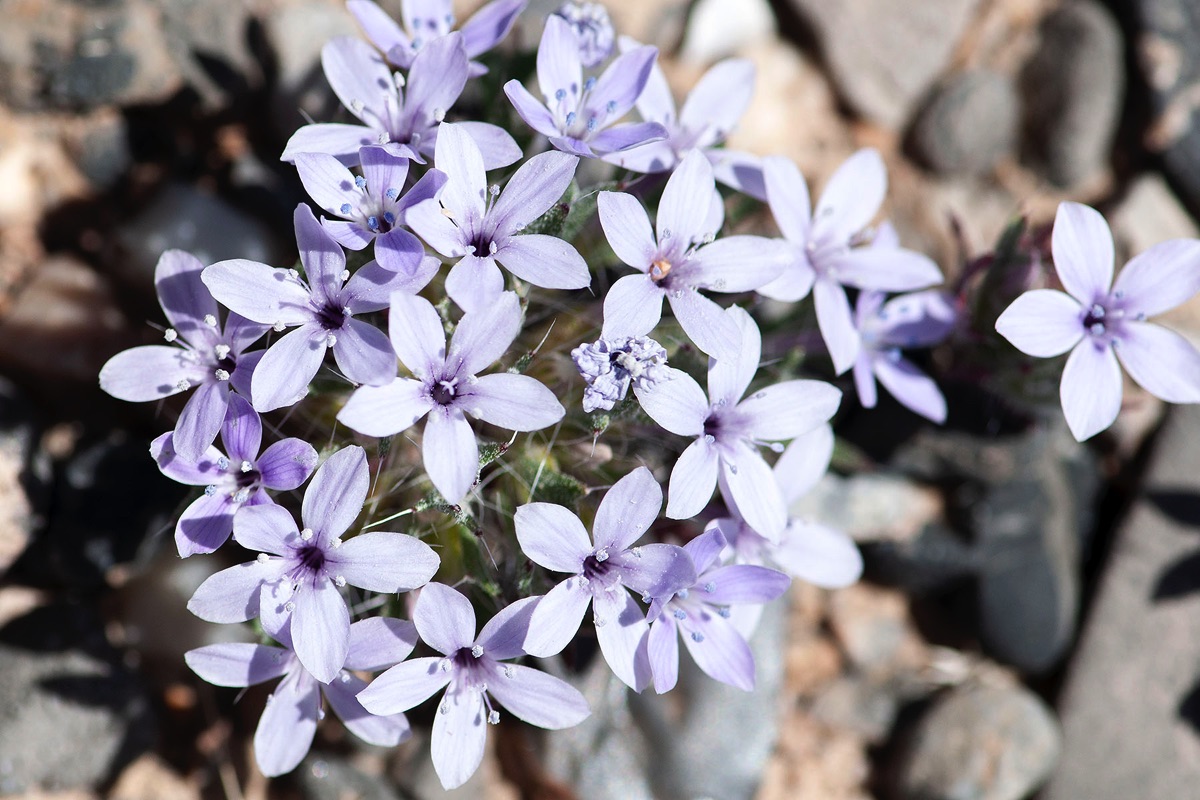
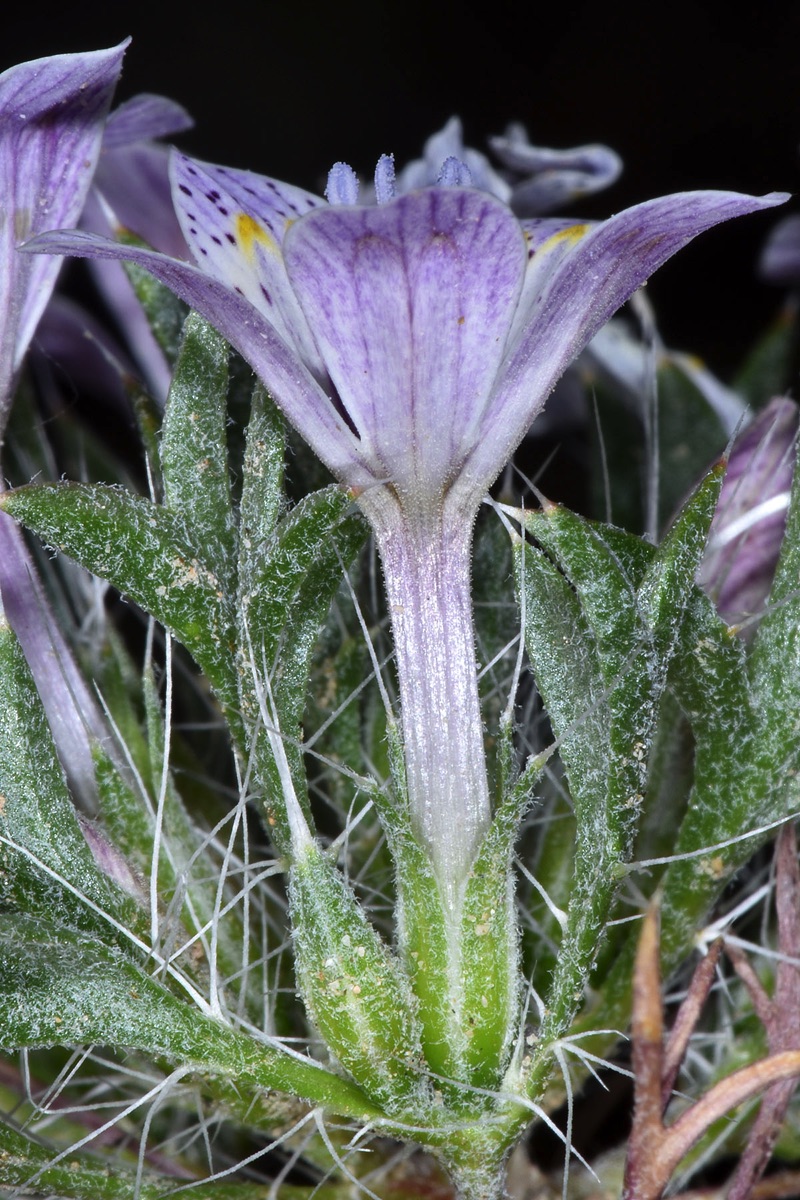
Loeseliastrum - one of a few species with zygomorphic corollas in this family
Aliciella subnuda
Aliciella subnuda
Polemoniaceae1.png
Polemoniaceae1.png
Polemoniaceae2.png
Polemoniaceae2.png
Polemoniaceae3.png
Polemoniaceae3.png
Polemoniaceae4.png
Polemoniaceae4.png